Adding Easter Messaging to Title Tags and Meta Descriptions: SEO Split Testing Lessons from SearchPilot
- April 15, 2021
- Metadata

AI Summary
Adding Easter or other seasonal wording to title tags and meta descriptions can lift organic click through rate during the relevant window, but the effect is seasonal and can reverse the rest of the year. Run it as a controlled split test, keep the primary keyword in the title, and schedule the copy to revert after the event.
- Seasonal title copy is a click through rate lever, not a ranking lever
- Google may rewrite promotional or off topic titles, so verify on the live SERP
- Meta descriptions are often rewritten, so the title is the reliable surface
- Measure click through rate on the changed pages against an unchanged control
This SEO case study documents a successful optimization initiative, providing actionable insights for practitioners. The documented approach demonstrates how strategic SEO implementation drives measurable results.
Initial Situation
Understanding the starting point is essential context for evaluating any case study. This documentation covers the initial challenges, competitive position, and business objectives that shaped the SEO strategy.
Strategy and Approach
The strategic approach combined multiple SEO disciplines to address identified opportunities. Key decisions around prioritization and resource allocation provide a template for similar initiatives.
Implementation
Moving from strategy to execution required specific technical implementations, content development, and process changes. This case study documents the practical steps that translated strategy into action.
Results and Learnings
The outcomes demonstrate effectiveness through measurable improvements in rankings, traffic, and business metrics. Analysis of successes and challenges provides learning value for practitioners.
Case studies like this contribute to the SEO knowledge base, helping practitioners learn from documented real-world experiences.
Practitioner commentary
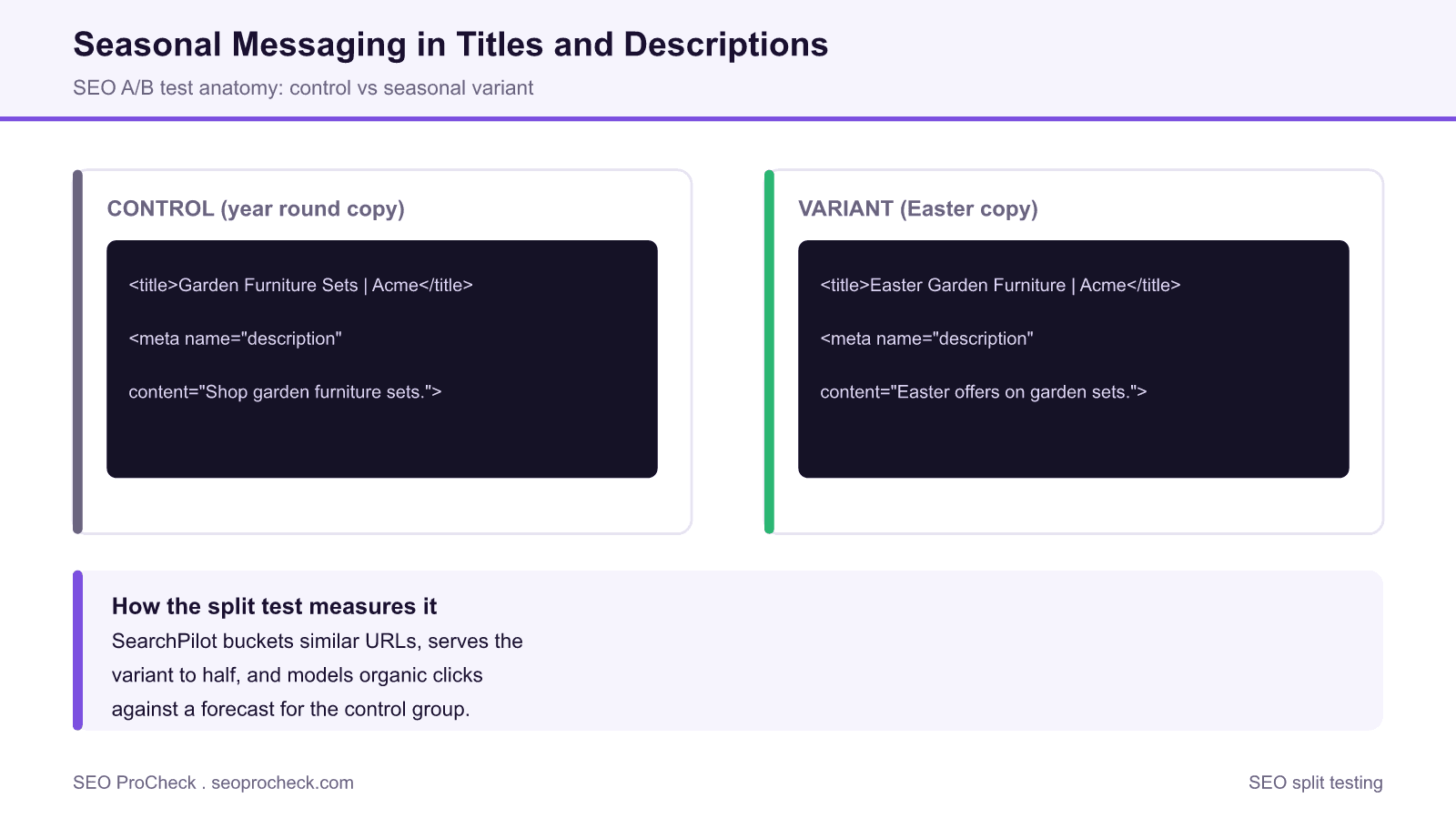
This case study looks at what happens when you inject a seasonal hook, in this instance Easter, into the title tag and meta description of transactional template pages, then measure the organic search impact with a controlled test rather than a guess.
Why seasonal messaging is worth testing at all
A title tag is the single largest lever you have over organic click through rate on a page that already ranks. Seasonal language such as Easter, spring sale, or gift ideas can raise relevance for people who are shopping with an occasion in mind, and it can lift click through rate during the weeks that matter. The catch is that the same copy can depress performance the rest of the year, and Google may rewrite a title it judges to be promotional or off topic. That combination of upside and risk is exactly why this belongs in a split test, not in a blanket rollout.
The practitioner mistake is to swap every title to Easter copy in March, watch traffic move for unrelated reasons such as a core update or seasonality in demand, and then credit or blame the copy. A controlled test isolates the copy change from the calendar so you learn something you can reuse next year.
How to run this test without fooling yourself
SearchPilot works by grouping a large set of similar pages, for example every product category on one template, then randomly assigning each page to a control or a variant bucket. Only the variant bucket receives the Easter copy. Because both buckets ride through the same seasonality, the same core updates, and the same demand curve, the difference between the observed variant traffic and a forecast built from the control isolates the effect of the copy.
If you do not have a testing platform, you can approximate this with a matched pairs design. Pick pages with similar traffic and intent, change half, hold half, and compare click through rate in Search Console for the exact same date range. Segment by query so branded clicks do not drown out the non branded demand you actually influenced. Always let a seasonal test run through the full run up and the event itself, because the payoff is concentrated in a short window.
Reading the result and deciding what to ship
A seasonal test has three plausible outcomes. It lifts click through rate meaningfully, in which case you schedule the copy to appear on a date range and revert automatically after the event. It does nothing, in which case you keep your evergreen title and avoid the maintenance cost. Or it hurts, often because Google rewrote the title or because the seasonal word crowded out the primary keyword and the page lost snippet relevance. Because Google rewrites titles freely, a winning test is not a permanent promise, so re confirm on the live SERP after you ship.
The durable takeaway is procedural. Treat seasonal copy as a scheduled, reversible change tied to a calendar, keep the primary keyword in the title even when you add the hook, and measure click through rate on the pages you actually changed rather than sitewide traffic.
Where to place seasonal messaging and what to expect
| Surface | Control you have | What Google may do | Practical advice |
|---|---|---|---|
| Title tag | High, you author it | May rewrite promotional or off topic titles | Keep the primary keyword, add the hook as a prefix or suffix |
| Meta description | Low, often rewritten | Frequently regenerates per query | Use as a soft nudge, do not rely on it |
| On page H1 and copy | High | Can be pulled into a snippet | Add visible seasonal context Google can quote |
| Structured data | Medium | Powers some rich results | Use offer and availability data, not seasonal slogans |
What has changed since this test
Google has grown far more willing to rewrite title links since the August 2021 title update, so a seasonal title you set is a strong suggestion rather than a guarantee. Promotional or repetitive seasonal phrasing is a common trigger for a rewrite, which can quietly erase the change you tested.
Meta descriptions are rewritten by Google most of the time, and are more often taken from on page text for a given query. Seasonal wording in the description is therefore best treated as a nudge that sometimes shows, not a controlled surface. The reliable seasonal lever remains the title link and any visible on page seasonal content that Google can pull into a snippet.
Related reading
Frequently asked questions
Does adding Easter or seasonal words to a title tag help SEO?
It can raise click through rate during the relevant window because the copy matches occasion driven intent, but the effect is seasonal and can reverse the rest of the year. Test it on a subset of pages, keep the primary keyword in the title, and schedule the copy to revert after the event.
Will Google rewrite my seasonal title?
Sometimes. Since the 2021 title update Google rewrites titles it judges promotional, repetitive, or off topic, and seasonal slogans are a common trigger. Always confirm on the live search result page that your intended title is actually showing before you trust the test.
Should I put seasonal wording in the meta description too?
You can, but Google rewrites descriptions for most queries and often builds them from on page text, so the description is an unreliable surface for seasonal copy. Put the durable seasonal signal in the title and in visible on page content.
How long should a seasonal title test run?
Run it through the full lead up and the event itself, because the payoff is concentrated in a short window. A test that ends before the peak will understate the effect, and one that only covers the peak misses the ramp.
How do I measure the impact without a testing platform?
Use a matched pairs approach. Change half of a set of similar pages, hold the other half, and compare click through rate in Search Console for the identical date range, segmented by branded and non branded queries so demand shifts do not mask the copy effect.
Is it safe to change every page to seasonal copy at once?
No. A blanket change gives you no control group, so any traffic movement is confounded with seasonality and algorithm updates. Split the change so you can attribute the result and revert cleanly.
Claude Vincent is a technical SEO consultant focused on crawlability, rendering, and AI-search visibility. He writes the field guides and case studies at SEO ProCheck, with a bias toward the durable, unglamorous work that decides whether search engines and AI answer engines can actually read and cite a site.
About SEO ProCheck
Technical SEO consulting and GEO strategy with 20 years of enterprise experience. Case studies, resources, and tools for search and AI visibility.
Work With Me
Technical SEO audits, GEO strategy, site migrations, and international SEO. Hourly consulting for teams who need hands-on support, not just reports.
Subscribe to our newsletter!