

AI Summary
Enterprise SEO strategies that actually work are less about clever tactics and more about process: prioritizing by revenue, standardizing technical templates, building topical authority, aligning teams and measuring what leadership funds. This guide keeps the original Search Engine Journal reference and adds a practitioner view of how large organizations compound organic gains.
- Sequence work by business value, not by whichever ticket is oldest.
- Bake SEO into shared templates and components so scale works for you, not against you.
- Topical authority comes from depth across a topic, not scattered single posts.
- Measurement that ties SEO to pipeline is what protects the budget.
5 Enterprise SEO Strategies & Tactics That Really Work provides valuable insights for SEO practitioners. This resource examines approaches and considerations that can improve organic search performance.
Why enterprise strategy beats enterprise tactics
At scale, the winning move is rarely a new tactic. It is a system that makes good SEO the default across thousands of pages and several teams. The five strategies below are the ones that compound, because each one keeps paying off long after you set it up. They are the flip side of the common enterprise SEO problems that hold large sites back.
The five strategies
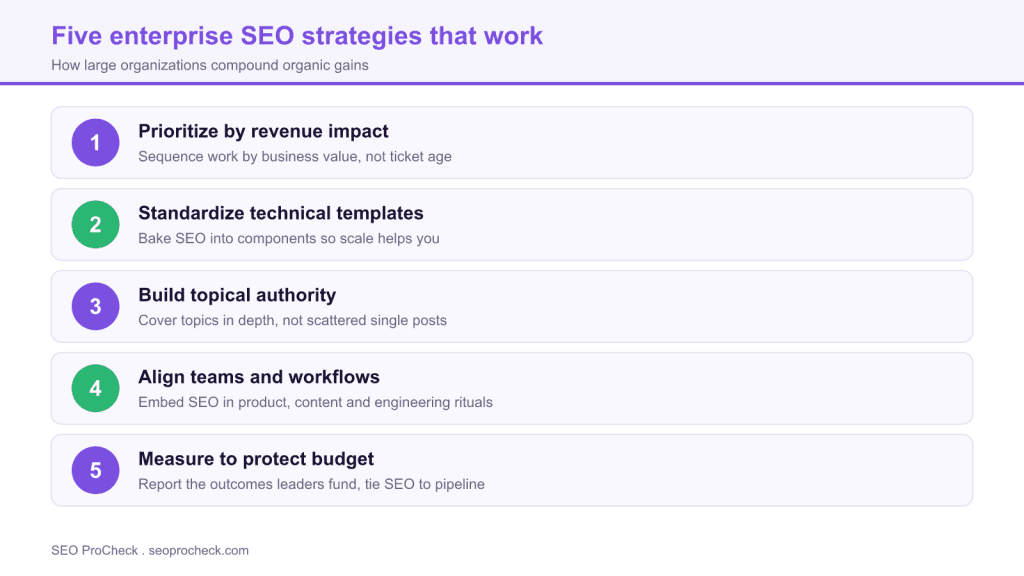
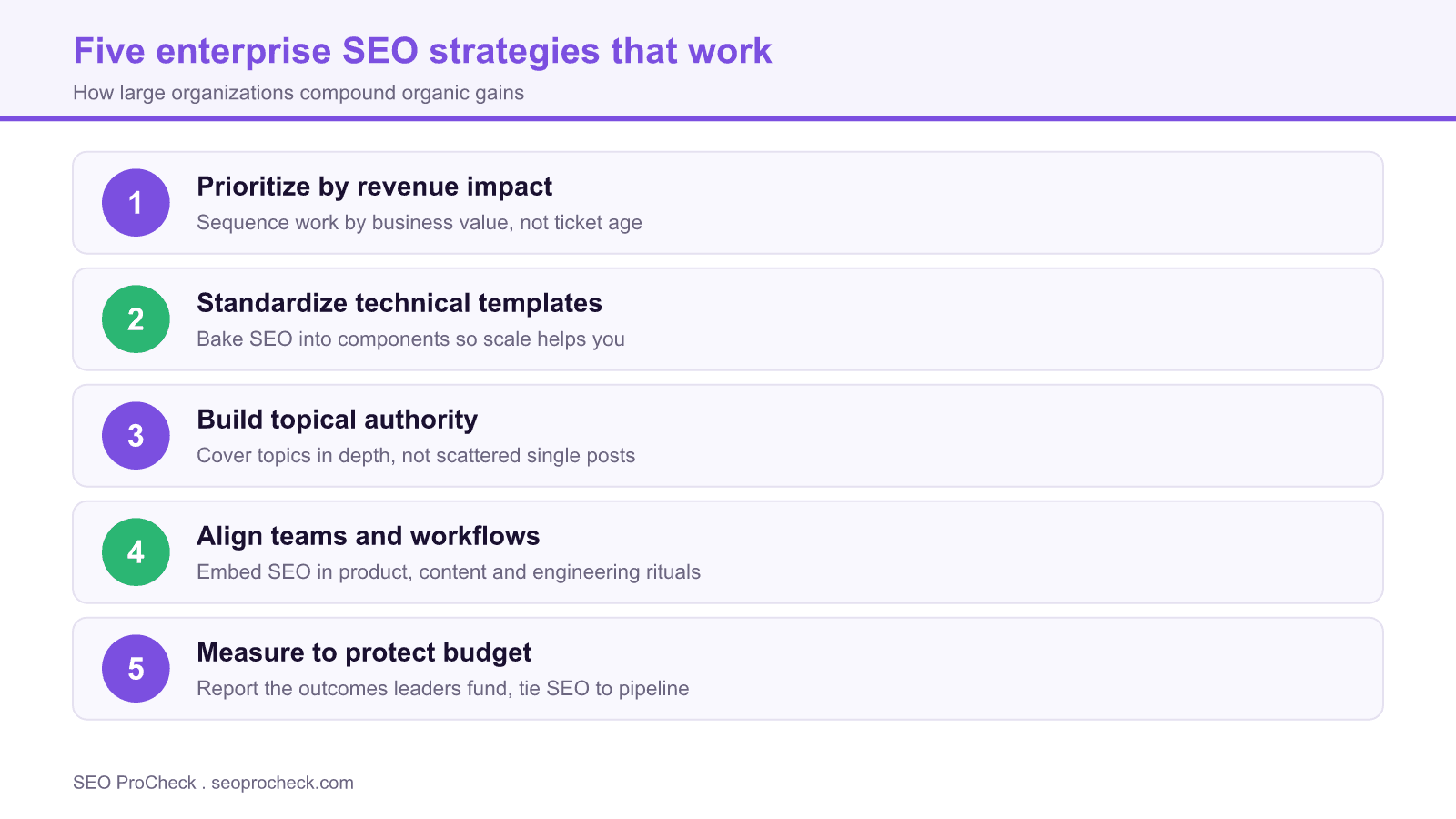
1. Prioritize by revenue impact
Enterprise backlogs are endless, so sequencing is the real skill. Rank opportunities by potential revenue and effort, and work the high value, low effort items first. This keeps momentum visible and funding secure.
2. Standardize technical templates
When SEO rules live in shared components, titles, canonicals, structured data and headings are correct by default. Scale then helps you instead of multiplying mistakes. Understanding directives like index and noindex, covered in the meta robots reference, keeps those templates safe.
3. Build topical authority
Publishing one post per topic scatters your effort. Covering a topic in genuine depth, with a clear hub and supporting pages, signals expertise to both search engines and answer engines. Depth, not breadth, is what earns durable rankings.
4. Align teams and workflows
Enterprise SEO lives or dies on whether product, content and engineering build it into their rituals. Embed SEO acceptance criteria into sprints, content briefs and design reviews so it is never an afterthought bolted on at launch.
5. Measure to protect the budget
Report the outcomes leaders already fund: revenue influenced by organic, conversions and pipeline. When measurement speaks the language of the business, SEO stops being the first line cut in a tight quarter.
A first ninety day sequence
Strategy is easier to adopt when it starts small. In the first month, instrument measurement so every organic win maps to a revenue page, and agree with leadership on the one metric that defines success. In the second month, audit the two or three templates that generate the most pages and fix the SEO rules inside them, so improvements scale automatically. In the third month, pick a single high value topic and build a proper hub with supporting pages to demonstrate topical depth. This sequence delivers a visible result before the program asks for a large budget, which builds the trust you need for the harder cross team alignment work that follows. Momentum, not perfection, is what carries enterprise SEO through its first year.
Enterprise strategy in practice
| Strategy | Enterprise pitfall | What good looks like |
|---|---|---|
| Prioritize by revenue | Oldest ticket wins | High value, low effort work shipped first |
| Standardize templates | Rules live in one off pages | SEO baked into shared components |
| Build topical authority | One shallow post per topic | Hub and supporting pages with real depth |
| Align teams | SEO bolted on at launch | Acceptance criteria in every sprint |
| Measure outcomes | Reports show rank only | Dashboards tie SEO to pipeline |
What has changed for enterprise strategy
The strategic pillars are durable, but the emphasis moved. Topical authority and genuine depth now matter more because AI overviews and answer engines cite well structured, trustworthy pages. Standardized templates matter more because structured data feeds those AI experiences. And measurement matters more than ever, since organic clicks can shift to AI answers, so tying work to pipeline rather than raw traffic keeps the program funded through the transition.
Key Concepts
Understanding the fundamental principles behind this topic helps inform strategic decisions. Whether optimizing for traditional search or emerging AI platforms, foundational concepts remain relevant. This resource covers the essential knowledge practitioners need.
Implementation Considerations
Moving from concept to execution requires understanding practical constraints and opportunities. Different situations call for different approaches. This resource provides guidance for applying concepts in real-world contexts.
Measuring Impact
SEO efforts require measurement to demonstrate value and guide optimization. Identifying appropriate metrics, establishing baselines, and tracking progress enables data-driven improvement. This resource addresses how to evaluate success.
This resource contributes to the knowledge base SEO practitioners need for effective optimization in an evolving search landscape.
Frequently asked questions
What makes enterprise SEO different from small site SEO?
Scale and coordination. The same fix must survive templates, a content management system, a release process and several teams, so process and standardization matter more than individual page edits.
How should an enterprise SEO team prioritize work?
By revenue impact and effort. Rank opportunities so high value, low effort items ship first, which keeps results visible and protects the budget.
Why are technical templates so important at scale?
Because SEO rules that live in shared components are applied correctly across every page automatically, so scale multiplies good decisions instead of mistakes.
What is topical authority?
It is the depth and coverage a site demonstrates on a subject, built with a clear hub page and supporting pages, which signals expertise to both search engines and answer engines.
How do you keep enterprise SEO funded?
Measure and report the outcomes leadership already values, such as revenue influenced by organic search, conversions and pipeline, rather than rankings alone.
Do these strategies still work with AI search?
Yes, and they matter more. Depth, structured templates and trustworthy content are exactly what answer engines reward when they choose which pages to cite.
Source: https://www.searchenginejournal.com/enterprise-seo/strategies-tactics-that-work
Take this with you
The assistant links open with a question about this page already written. Nothing is sent until you press enter.
Claude Vincent is a technical SEO consultant focused on crawlability, rendering, and AI-search visibility. He writes the field guides and case studies at SEO ProCheck, with a bias toward the durable, unglamorous work that decides whether search engines and AI answer engines can actually read and cite a site.
About SEO ProCheck
Technical SEO consulting and GEO strategy with 20 years of enterprise experience. Case studies, resources, and tools for search and AI visibility.
Work With Me
Technical SEO audits, GEO strategy, site migrations, and international SEO. Hourly consulting for teams who need hands-on support, not just reports.
Subscribe to our newsletter!







Recent Posts
- Finding a Competitor's Sitemap, and Turning It Into a Change Log September 15, 2026
- AI Crawler User Agents: The Current Names, and Which Ones Sites Actually Block September 9, 2026
- Can AI Crawlers Actually Read Your Site? I Measured 400 of the Biggest September 5, 2026