

Adding Ratings and Reviews Structured Data: SEO Split-Testing Lessons from SearchPilot
- May 12, 2021
- Metadata
AI Summary
This split test adds ratings and reviews structured data to local pages so that star rich results can appear in search listings. The lesson is that valid, honest AggregateRating markup tied to visible reviews can lift click through rate, but self serving or fabricated markup risks a policy penalty.
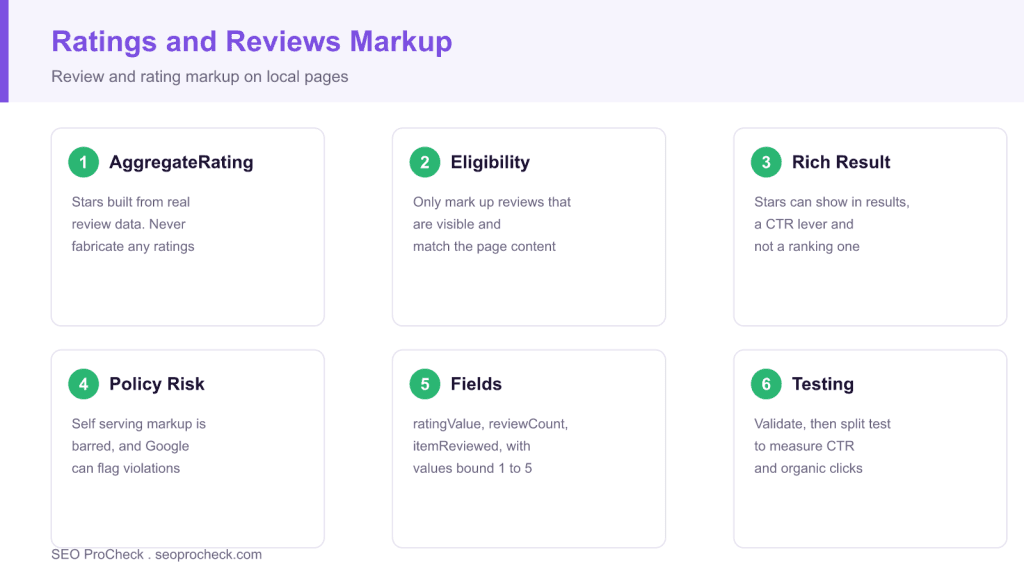
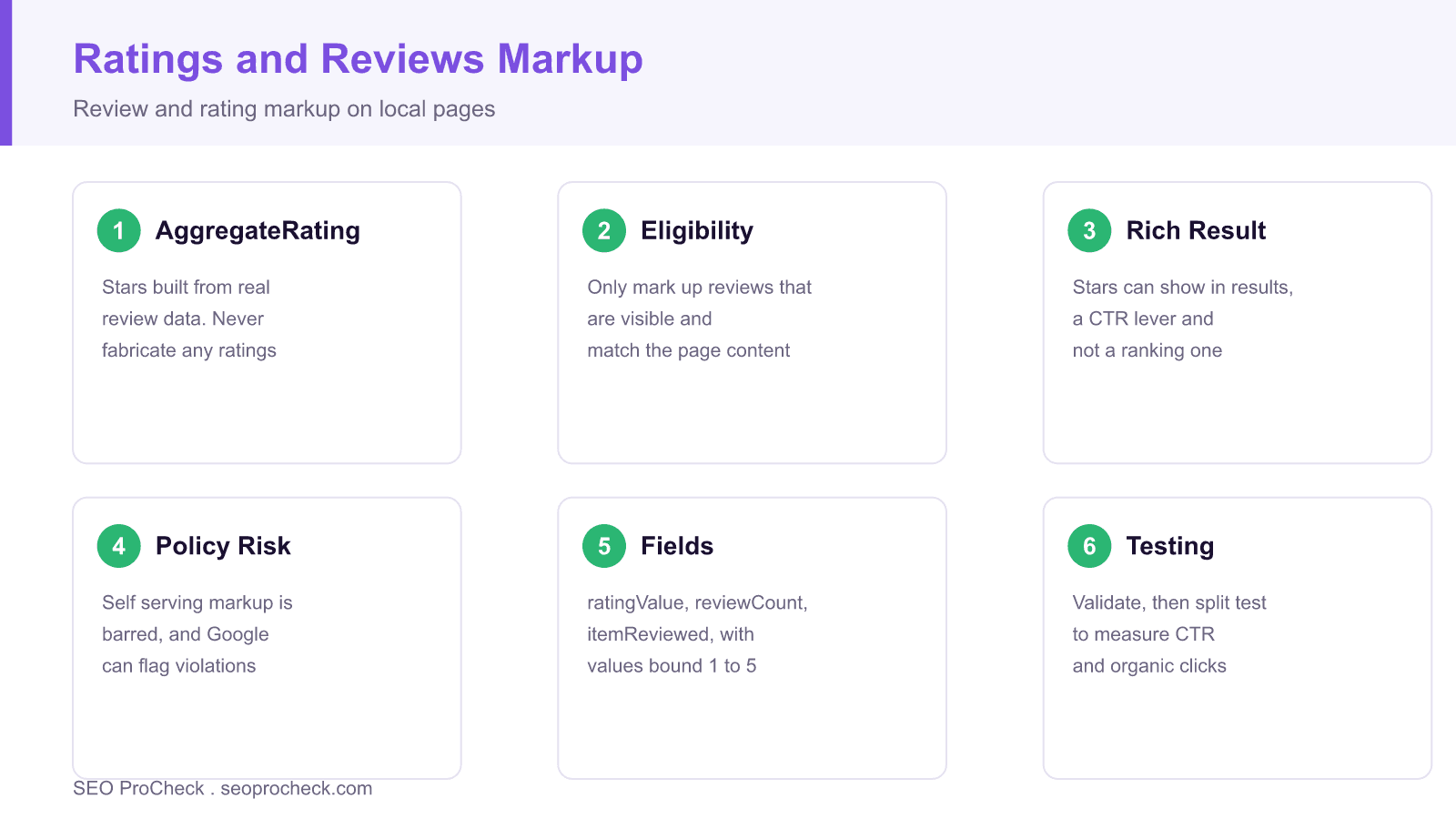
- AggregateRating markup builds stars from real, visible review data.
- Star rich results influence click through rate rather than ranking position.
- Only mark up reviews that appear on the page and match its content.
- Self serving or invented review markup violates Google policy.
This SEO case study documents a successful optimization initiative, providing actionable insights for practitioners. The documented approach demonstrates how strategic SEO implementation drives measurable results.
Initial Situation
Understanding the starting point is essential context for evaluating any case study. This documentation covers the initial challenges, competitive position, and business objectives that shaped the SEO strategy.
Strategy and Approach
The strategic approach combined multiple SEO disciplines to address identified opportunities. Key decisions around prioritization and resource allocation provide a template for similar initiatives.
Implementation
Moving from strategy to execution required specific technical implementations, content development, and process changes. This case study documents the practical steps that translated strategy into action.
Results and Learnings
The outcomes demonstrate effectiveness through measurable improvements in rankings, traffic, and business metrics. Analysis of successes and challenges provides learning value for practitioners.
Case studies like this contribute to the SEO knowledge base, helping practitioners learn from documented real-world experiences.
Practitioner Commentary
Star ratings in a search result are one of the strongest visual cues available. A listing that shows four and a half stars pulls attention away from plain blue links, so adding ratings and reviews structured data is a natural experiment for local pages that genuinely collect feedback. When it works, the gain shows up as a higher click through rate rather than a change in position, which is exactly what a split test is designed to isolate.
The rules matter as much as the reward. The markup must describe reviews that are actually visible on the page, the ratings must be real, and the item being reviewed must be the subject of the page. Fabricating ratings or applying self serving review markup to your own business on your own site is against Google policy and can trigger a manual action that removes the rich result entirely. This is the same discipline that runs through the other metadata experiments, including the Book Now title test and the breadcrumb markup fixes.
On the technical side, the core fields are ratingValue, reviewCount or ratingCount, and a clearly identified item, with values bound to the scale you display, commonly one to five. Validate the markup in the Rich Results Test before you ship, because a malformed field can make the whole block ineligible. Then run the change as a split test: apply it to a defined group of local pages, hold a comparable group as control, and compare organic clicks over a period long enough to clear noise.
The durable takeaway is that structured data is a presentation lever, not a ranking shortcut. Used honestly it can make a listing more compelling and earn more of the clicks a ranking already deserves. Used carelessly it invites a penalty, so the safe path is real reviews, valid markup, and a measured rollout.
What Has Changed Since This Was Published
Google tightened its stance on review snippets, limiting self serving markup where a business rates itself and narrowing the schema types eligible for review rich results. That makes eligibility and honesty the first questions to ask, before any test. The measurement approach is unchanged, since click through rate remains the metric that a review snippet moves. In short, confirm the markup is allowed for your page type, keep the ratings real and visible, then split test to see whether the stars actually earn more clicks.
Key Ratings Markup Fields
| Field | Purpose | Rule of thumb |
|---|---|---|
| ratingValue | The average score | Bound to your visible scale, often 1 to 5 |
| reviewCount | Number of reviews | Match the count shown on the page |
| itemReviewed | The subject rated | Must be the focus of the page |
| Visible reviews | Eligibility basis | Only mark up reviews users can see |
Frequently Asked Questions
Do review stars help rankings?
Review rich results mainly affect how your listing looks and its click through rate. They are not a direct ranking factor, though more clicks on a well ranked page can be valuable.
Can I add ratings markup for my own business?
Self serving review markup, where a business rates itself on its own site, is against Google policy for review snippets. Use ratings for items where the reviews are independent and visible on the page.
What are the required fields?
At minimum you provide a rating value, a review or rating count, and a clearly identified item being reviewed. Values should match the scale you display, commonly one to five.
Why did my stars disappear from results?
Google may drop review snippets that break policy, use invisible reviews, or contain malformed markup. Revalidate in the Rich Results Test and confirm the reviews are genuinely visible on the page.
Should I fabricate ratings to get stars?
No, never fabricate ratings, since that violates policy and can trigger a manual action. Only mark up real reviews that appear on the page.
How do I prove the markup helped?
Split test it by applying the markup to one group of pages and holding a comparable control group. Compare organic click through rate over the same period to isolate the effect.
Take this with you
The assistant links open with a question about this page already written. Nothing is sent until you press enter.
Claude Vincent is a technical SEO consultant focused on crawlability, rendering, and AI-search visibility. He writes the field guides and case studies at SEO ProCheck, with a bias toward the durable, unglamorous work that decides whether search engines and AI answer engines can actually read and cite a site.
About SEO ProCheck
Technical SEO consulting and GEO strategy with 20 years of enterprise experience. Case studies, resources, and tools for search and AI visibility.
Work With Me
Technical SEO audits, GEO strategy, site migrations, and international SEO. Hourly consulting for teams who need hands-on support, not just reports.
Subscribe to our newsletter!








Recent Posts
- Most Top Sites Never Say Who They Are in Structured Data October 14, 2026
- Homepage Titles Are Mostly Too Short, Not Too Long October 8, 2026
- Who Actually Serves an llms.txt? 184 Top Sites Measured September 29, 2026