

How Recent Google Updates Punish Good SEO: 50-Site Case Study - Zyppy SEO Consulting
- June 21, 2024
- General
AI Summary
Zyppy SEO Consulting's 50 site case study makes an uncomfortable point: sites following classic SEO best practice have been hit by recent Google updates. The lesson is not to abandon SEO but to recognize that over optimization and content built for search engines can now read as a low quality signal.
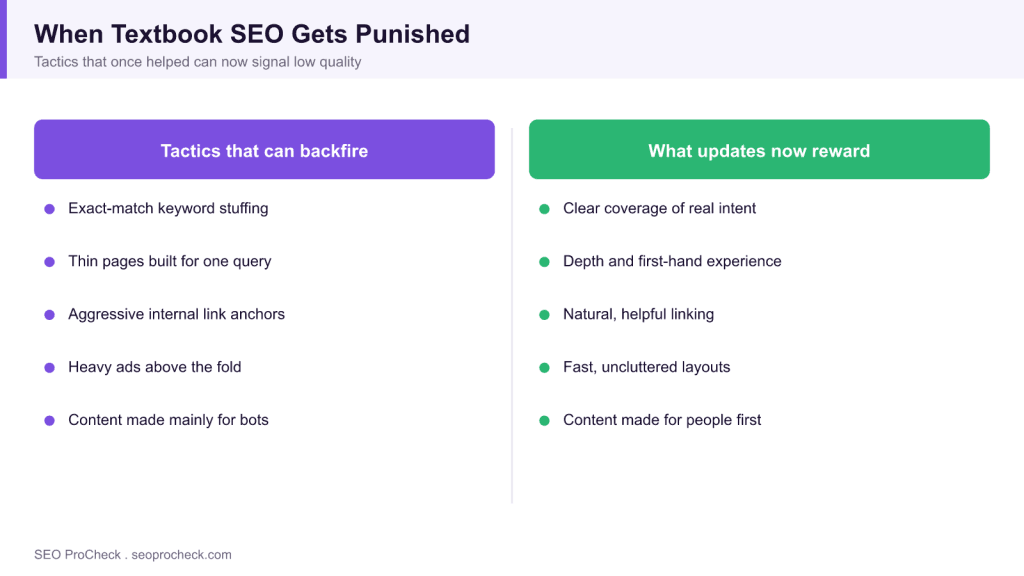
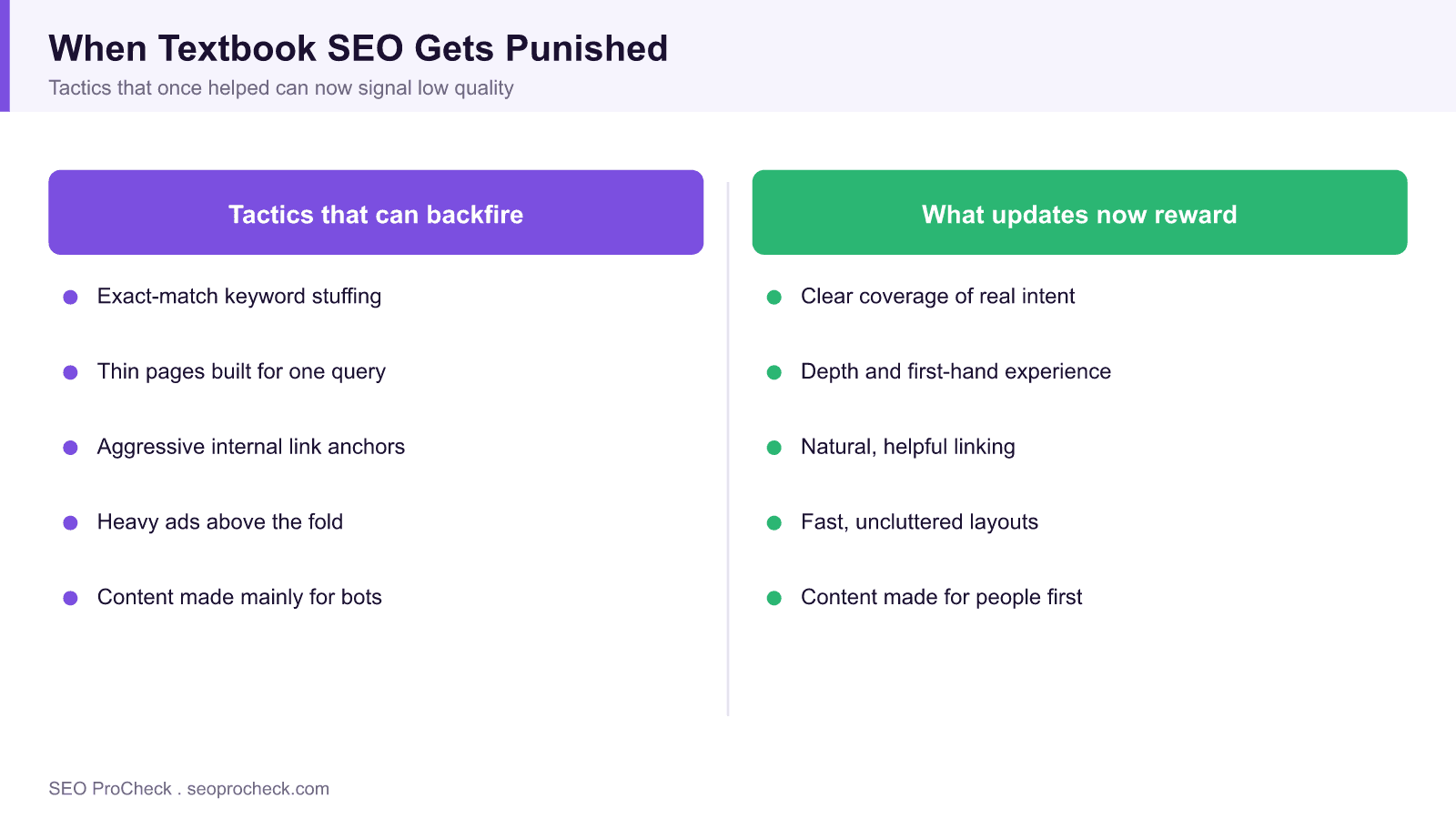
- Textbook tactics such as exact match targeting and thin, templated pages can now correlate with declines.
- Updates increasingly reward satisfaction, first hand experience, and restraint over aggressive optimization.
- Being technically flawless is not enough if the underlying content is not the most helpful result.
- Recovery favors consolidation, added experience, and cutting pages made mainly for rankings.
Why "good SEO" started losing
The provocation in Zyppy's 50 site study is that sites doing everything the old playbook recommended, tight keyword targeting, comprehensive interlinking, clean technical setups, still lost visibility in recent updates. That feels unfair until you separate two ideas that used to be the same: optimizing for a ranking system, and being the result a searcher is happiest to land on. For years those overlapped. As Google folded helpfulness and satisfaction signals deeper into core ranking, they began to diverge, and the most heavily optimized version of a page is sometimes the least satisfying one.
Read the study as a warning about over optimization rather than a reason to stop caring about SEO. The fundamentals still matter. What has changed is that the marginal keyword variation, the extra thin page for a near duplicate query, and the anchor text engineered for relevance now carry downside risk they did not a decade ago.
Optimization patterns that now carry risk
Several habits that reliably helped in the past can read as quality problems today. None is guaranteed to hurt, but each is worth auditing when a site with clean technicals loses ground:
- Query fragmentation: splitting one topic into many near identical pages to capture keyword variants. Consolidating them into one authoritative page often recovers more than it loses.
- Exact match everything: URLs, titles, and headings all tuned to the same phrase can look engineered. Natural language that covers the intent tends to hold up better.
- Templated depth: programmatically generated pages that look comprehensive but add no experience or judgment are a classic helpful content target.
- Interlinking at scale: aggressive internal anchors designed to pass relevance can trip pattern detection and annoy readers.
- Monetization density: heavy ads, interstitials, and affiliate blocks above the content degrade the experience the systems now measure.
Reframing best practice for the current landscape
| Old best practice | Where it can backfire | Safer modern version |
|---|---|---|
| A page per keyword | Thin, cannibalizing near duplicates | One deep page per intent, covering variants |
| Keyword in every heading | Reads as engineered, not helpful | Headings that match how people actually ask |
| Comprehensive by word count | Filler that dilutes the answer | Comprehensive by covering the real questions |
| Maximize internal links | Unnatural anchor patterns | Link where it genuinely helps the reader |
| Optimize for the crawler | Content that satisfies no one | Write for the person, then check the technicals |
A recovery approach that fits the evidence
If a site looks like a study subject, losing traffic despite clean SEO, start with an honest content audit rather than more optimization. Identify clusters of near duplicate pages and consolidate them into single strong resources with clear redirects. On the survivors, add what a templated competitor cannot copy: first hand testing, original data or media, named authorship, and specific detail that proves experience. Reduce anything that degrades the reading experience, especially intrusive ads and pop ups. Then leave the changes in place, because recovery from quality reassessment is measured over weeks and often lands with the next broad update rather than immediately. Resist the urge to add more thin pages to compensate, which usually deepens the hole.
The original resource
Google algorithm updates regularly reshape the SEO landscape. Understanding update patterns, impacts, and appropriate responses helps maintain visibility through algorithmic changes. This resource examines update dynamics and strategic responses.
Update Types and Impacts
Google releases different update types: core updates affecting overall ranking systems, specific updates targeting issues like spam or helpful content, and incremental improvements happening continuously. Understanding which type affects your site informs response strategy.
Analyzing Update Impact
When traffic changes coincide with updates, analysis should identify what changed: which pages, which queries, which competitors gained. Correlation with update timing suggests algorithmic cause, but confirmation requires examining what changed in the ranking landscape.
Strategic Response
Response depends on update type and impact diagnosis. Core updates often reward sustained quality improvements over quick fixes. Specific updates may require addressing identified issues. In all cases, focusing on user value and content quality remains the sustainable approach.
This resource provides guidance for understanding and responding to Google's evolving algorithm landscape.
Frequently asked questions
Does this study mean SEO no longer works?
No. It means over optimization and content built for search engines rather than people can now hurt you. Sound fundamentals, intent coverage, clean architecture, and genuine helpfulness still work and matter more than ever.
Can a technically perfect site still lose rankings?
Yes. Flawless technicals do not compensate for content that is not the most satisfying result for the query. Recent systems weigh helpfulness and experience alongside the technical signals SEOs traditionally optimize.
Should I delete my thin pages?
Consolidation usually beats deletion. Merge near duplicate pages into one authoritative resource and redirect the old URLs, so you keep any equity while removing the thin footprint that can drag the site down.
How do I add experience signals to existing content?
Include first hand testing, original screenshots or data, named authors with real credentials, and specific details a generic article could not contain. These are the signals templated competitors cannot easily fake.
How long until a site recovers after making these changes?
Typically weeks, and sometimes not until the next broad core update, because Google reassesses quality over time. Make the improvements, keep them stable, and avoid piling on new thin content while you wait.
Is aggressive internal linking really a problem now?
It can be when anchors are engineered purely to pass relevance rather than to help readers. Link where it genuinely aids navigation and understanding, and drop the mechanical anchor patterns designed only for the crawler.
Related reading on seoprocheck.com
- Google's helpful content system: how it works and how to survive it
- Helpful content update recovery steps
- Helpful content update winners and losers analysis
- Helpful content update: definition
Take this with you
The assistant links open with a question about this page already written. Nothing is sent until you press enter.
Claude Vincent is a technical SEO consultant focused on crawlability, rendering, and AI-search visibility. He writes the field guides and case studies at SEO ProCheck, with a bias toward the durable, unglamorous work that decides whether search engines and AI answer engines can actually read and cite a site.
About SEO ProCheck
Technical SEO consulting and GEO strategy with 20 years of enterprise experience. Case studies, resources, and tools for search and AI visibility.
Work With Me
Technical SEO audits, GEO strategy, site migrations, and international SEO. Hourly consulting for teams who need hands-on support, not just reports.
Subscribe to our newsletter!








Recent Posts
- Most Top Sites Never Say Who They Are in Structured Data October 14, 2026
- Homepage Titles Are Mostly Too Short, Not Too Long October 8, 2026
- Who Actually Serves an llms.txt? 184 Top Sites Measured September 29, 2026