Adding Prices to Titles: SEO Split Testing Lessons from SearchPilot
- October 22, 2020
- Metadata
AI Summary
Adding a price to the title tag can raise qualified click through rate on commercial queries while filtering out non buyers, so measure the effect on conversion and not on clicks alone. Only add prices from a live, accurate data feed, and expect Google to sometimes rewrite promotional titles.
- A price qualifies the click before it happens
- Stale or wrong prices erode trust, so generate them from a live feed
- Google may strip prices it judges promotional since the 2021 title update
- Product structured data and merchant listings are more reliable price surfaces
This SEO case study documents a successful optimization initiative, providing actionable insights for practitioners. The documented approach demonstrates how strategic SEO implementation drives measurable results.
Initial Situation
Understanding the starting point is essential context for evaluating any case study. This documentation covers the initial challenges, competitive position, and business objectives that shaped the SEO strategy.
Strategy and Approach
The strategic approach combined multiple SEO disciplines to address identified opportunities. Key decisions around prioritization and resource allocation provide a template for similar initiatives.
Implementation
Moving from strategy to execution required specific technical implementations, content development, and process changes. This case study documents the practical steps that translated strategy into action.
Results and Learnings
The outcomes demonstrate effectiveness through measurable improvements in rankings, traffic, and business metrics. Analysis of successes and challenges provides learning value for practitioners.
Case studies like this contribute to the SEO knowledge base, helping practitioners learn from documented real-world experiences.
Source: https://www.searchpilot.com/resources/case-studies/seo-split-test-lessons-adding-price-to-title/
Practitioner commentary
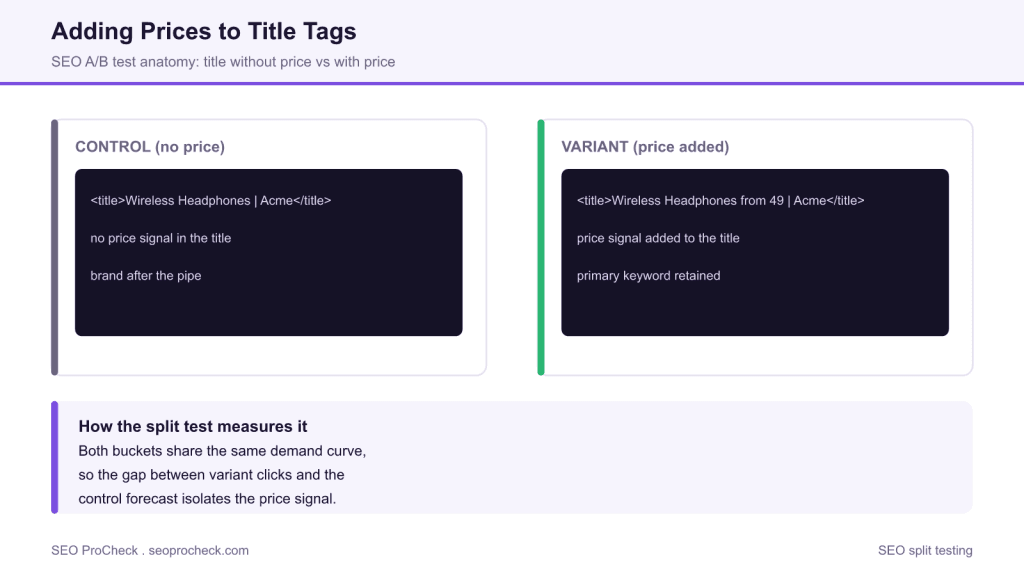
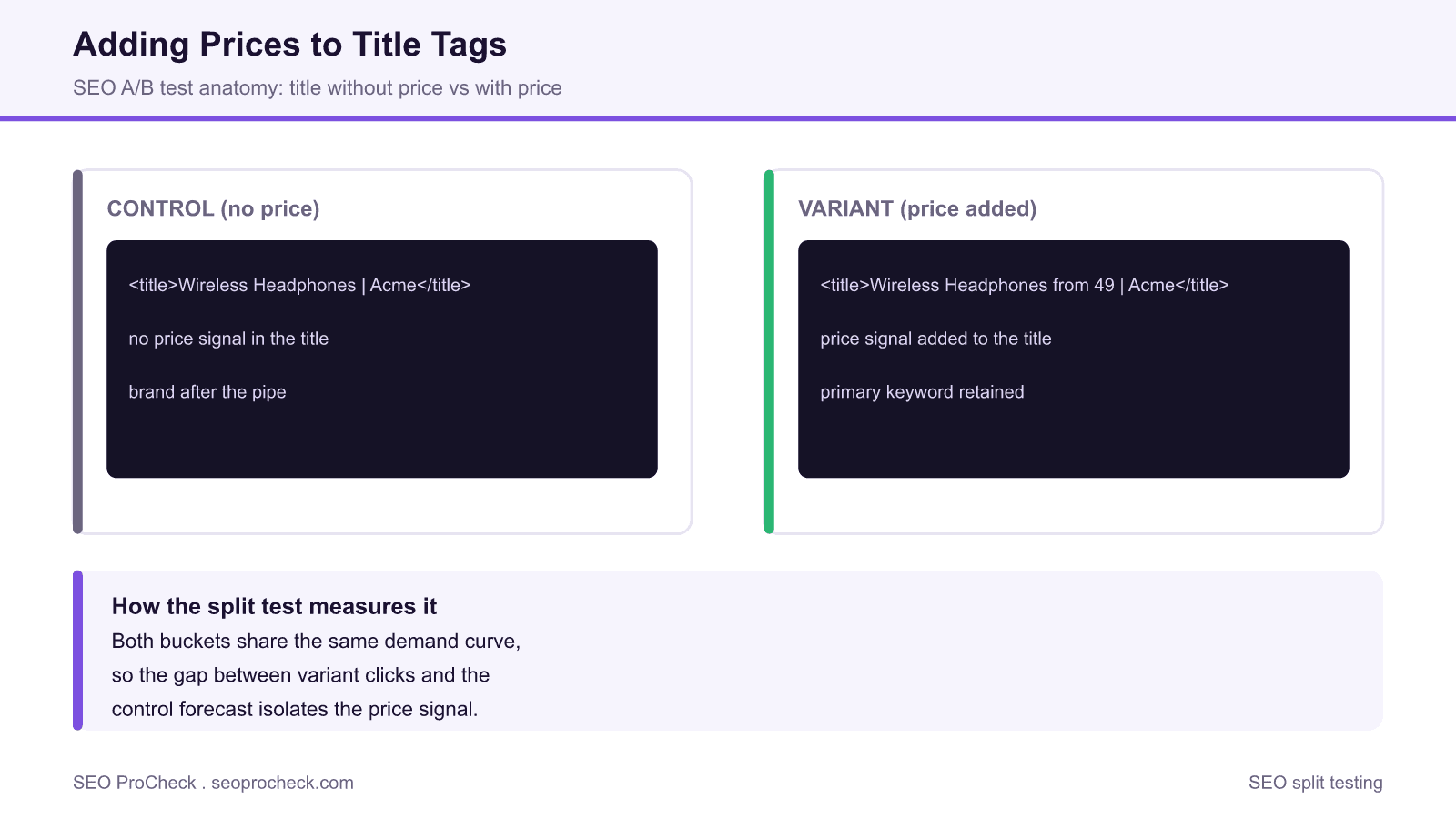
Adding a price, a starting from figure, or a discount to the title tag can qualify a click before it happens. This case study tests whether surfacing price in the title moves organic click through rate, and when that movement helps or hurts the business.
Price in the title is a qualifier, not just a hook
A price in the title sets an expectation before the click. On commercial queries that can raise click through rate from people whose budget matches, and it can lower click through rate from people for whom the price is too high, which is not necessarily bad because it filters out visits that would never convert. The net effect on click through rate and on revenue can point in different directions, so the metric you optimise matters. A title that wins more clicks but attracts unqualified traffic can still lose money.
This is why price belongs in a controlled test measured against a downstream outcome where possible. If you only look at click through rate you may ship a change that increases traffic and decreases conversion rate, and you would only notice much later.
Running the test and choosing the metric
Assign templated commercial pages to control and variant buckets. The variant adds a price token to the title, for example a starting from figure pulled from the same data source that renders the page, and the control keeps the plain title. Measure the variant against the control forecast. Where you can, extend the read beyond click through rate to sessions that reach the basket or a conversion event, so you can tell whether the extra clicks were qualified.
The data plumbing is the hard part. A price in a title must be accurate and current, because a stale price is worse than no price: it erodes trust and can trigger a poor experience when the searcher lands on a different number. Generate the price token from the live catalogue, add a rounding or from prefix so minor fluctuations do not force constant title rewrites, and set a rule to drop the token when stock or pricing data is missing.
Deciding whether to keep it
Keep the price in the title when the variant lifts qualified traffic and does not depress conversion rate, and when your pricing feed is reliable enough to keep the number honest. Drop it when the win is only in raw click through rate with no downstream benefit, when your prices are uncompetitive and the title advertises that fact, or when the feed cannot guarantee accuracy. As always, confirm on the live SERP, because Google may rewrite a title it considers promotional and strip the price you added.
The durable takeaway is to treat price in titles as a qualification tool tied to a live data feed, measured against a business outcome rather than clicks alone, and applied through a template so it stays accurate and reversible.
When a price in the title helps and when it hurts
| Scenario | Likely click through effect | Business effect | Recommendation |
|---|---|---|---|
| Competitive price, commercial query | Higher qualified clicks | Positive | Test and likely keep |
| Uncompetitive price | Lower clicks | Filters out non buyers | Usually drop |
| Stale or inaccurate feed | Clicks then bounce | Erodes trust | Do not ship |
| Informational query | Little or negative | Neutral to negative | Keep price out of the title |
What has changed since this test
Since the August 2021 title update Google rewrites titles more aggressively, and promotional tokens such as prices or discounts are a common rewrite trigger, so a price you add may not survive to the live result. Verification on the SERP is essential.
Price, availability, and sale information increasingly surface through merchant listings and Product structured data rather than through the title text itself. For many retailers the reliable place to communicate price is the Product markup and the merchant feed, with the title used for the primary keyword and a light qualifier at most.
Related reading
Frequently asked questions
Does adding a price to the title tag increase clicks?
It can raise click through rate on commercial queries from searchers whose budget matches, and lower it from those for whom the price is too high. Because it both attracts and filters, measure the effect on qualified traffic and conversion, not on raw clicks alone.
Is it risky to put prices in title tags?
The main risk is accuracy. A stale or wrong price erodes trust and creates a poor landing experience, so only add a price generated from a live, reliable data feed, and drop the token automatically when pricing or stock data is missing.
Will Google keep a price I add to the title?
Not always. Since the 2021 title update Google rewrites titles it judges promotional, and prices and discounts are common triggers. Confirm on the live search result that the price is actually showing before you trust the test.
Should I measure click through rate or conversions?
Both, where possible. A price can increase clicks while attracting unqualified traffic, so extend the read to sessions that reach the basket or a conversion event to confirm the extra clicks were worth having.
Where else can I show price in search results?
Through Product structured data and merchant listings, which are the more reliable surfaces for price, availability, and sale information. Use the title mainly for the primary keyword and treat any price token there as a light qualifier.
How do I keep title prices accurate at scale?
Generate the price token from the same live catalogue that renders the page, add a from or rounded prefix so small fluctuations do not force constant rewrites, and set a rule to omit the price when the feed lacks current data.
Claude Vincent is a technical SEO consultant focused on crawlability, rendering, and AI-search visibility. He writes the field guides and case studies at SEO ProCheck, with a bias toward the durable, unglamorous work that decides whether search engines and AI answer engines can actually read and cite a site.
About SEO ProCheck
Technical SEO consulting and GEO strategy with 20 years of enterprise experience. Case studies, resources, and tools for search and AI visibility.
Work With Me
Technical SEO audits, GEO strategy, site migrations, and international SEO. Hourly consulting for teams who need hands-on support, not just reports.
Subscribe to our newsletter!