

Fixing Breadcrumb Markup Errors: SEO Split-Testing Lessons from SearchPilot
- May 24, 2021
- Metadata
AI Summary
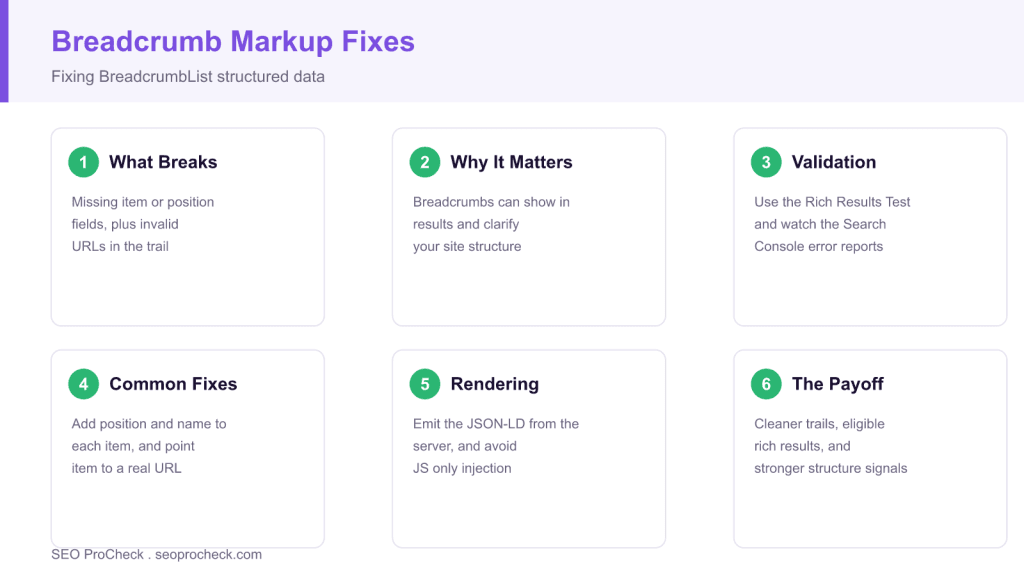
This case study fixes broken BreadcrumbList structured data, the markup that can render a breadcrumb trail in search results and clarify site structure. The lesson is that correcting missing position or item fields and pointing each item to a valid URL restores rich result eligibility and cleaner signals.
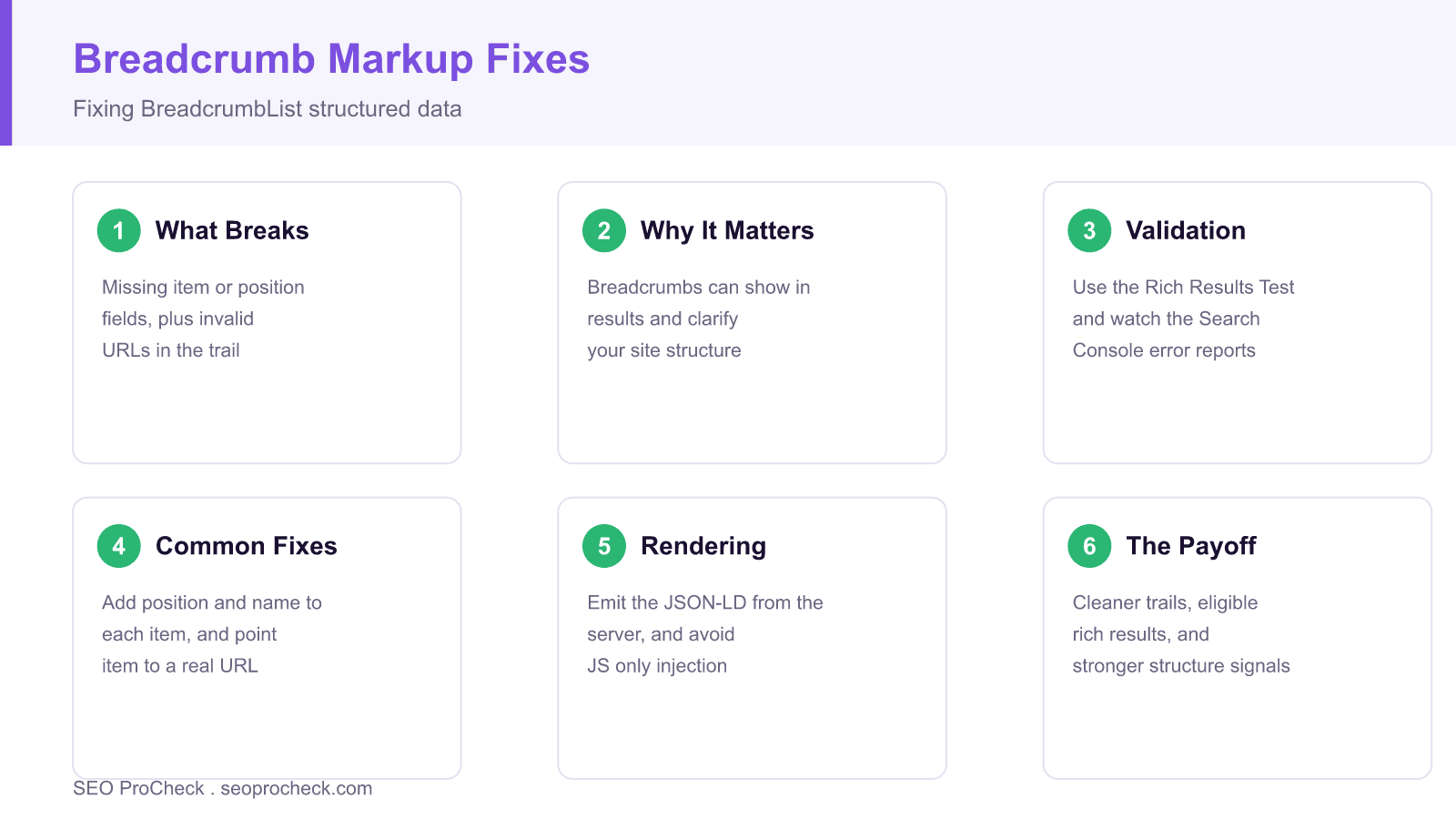
- Common breadcrumb errors are missing position or item fields and invalid URLs.
- Valid BreadcrumbList markup can show a trail in results and clarify structure.
- The Rich Results Test and Search Console reports catch these errors.
- Serving JSON-LD from the server avoids fragile JavaScript only injection.
This SEO case study documents a successful optimization initiative, providing actionable insights for practitioners. The documented approach demonstrates how strategic SEO implementation drives measurable results.
Initial Situation
Understanding the starting point is essential context for evaluating any case study. This documentation covers the initial challenges, competitive position, and business objectives that shaped the SEO strategy.
Strategy and Approach
The strategic approach combined multiple SEO disciplines to address identified opportunities. Key decisions around prioritization and resource allocation provide a template for similar initiatives.
Implementation
Moving from strategy to execution required specific technical implementations, content development, and process changes. This case study documents the practical steps that translated strategy into action.
Results and Learnings
The outcomes demonstrate effectiveness through measurable improvements in rankings, traffic, and business metrics. Analysis of successes and challenges provides learning value for practitioners.
Case studies like this contribute to the SEO knowledge base, helping practitioners learn from documented real-world experiences.
Practitioner Commentary
Breadcrumb markup is easy to underrate because it looks like a cosmetic detail. In practice it does two jobs. It can replace the raw URL in a search result with a readable trail, which improves how the listing looks, and it restates your site hierarchy in a machine readable way, which reinforces how pages relate. When the markup is broken, you lose both benefits and you may see errors pile up in Search Console.
The failures are usually mundane. An item in the list is missing its position number, so the sequence is ambiguous. A name is present but the item lacks a valid URL, or the URL points somewhere that returns an error. Sometimes the final crumb links to itself with a broken reference. None of these are exotic, yet any one of them can make the whole BreadcrumbList ineligible for a rich result. This is the metadata sibling of the on page work covered in the ratings and reviews structured data test and the title experiment in the Book Now CTA case study.
Validation is the heart of the fix. Paste the page into the Rich Results Test to see exactly which field is missing or malformed, then watch the breadcrumb report in Search Console for site wide patterns. Fixing one template usually clears errors across every page that uses it, so the work scales. The most reliable output is JSON-LD emitted in the server response, since markup that only appears after client side JavaScript can be missed or delayed during rendering.
Once the markup validates, keep it honest. The breadcrumb should mirror the real path a user takes, with each item naming a genuine page and linking to a URL that returns a healthy response. Accurate structure is the whole point, and it is what makes the trail trustworthy to both searchers and crawlers.
What Has Changed Since This Was Published
The breadcrumb guidance has stayed remarkably stable. Google still documents BreadcrumbList with required position and item fields, still shows a dedicated breadcrumbs report in Search Console, and still offers the Rich Results Test for validation. The main shift is that more sites render content and markup with JavaScript, which makes server side JSON-LD the safer default. The practical routine is the same as ever: validate, fix the missing fields, point each item to a real URL, and confirm the fix on the live page.
Common Breadcrumb Errors and Fixes
| Error | Why it fails | Fix |
|---|---|---|
| Missing position | Sequence is ambiguous | Add a position integer to each item |
| Missing item URL | No target to resolve | Point item to a valid page URL |
| Broken or redirected URL | Item does not return 200 | Use the final canonical URL |
| JavaScript only markup | May be missed at render | Emit JSON-LD server side |
Frequently Asked Questions
What is BreadcrumbList structured data?
It is schema.org markup that describes the trail of pages leading to the current page. Search engines can use it to show a readable breadcrumb in results and to understand your hierarchy.
Why is my breadcrumb showing an error?
The most common causes are a missing position field, a missing or invalid item URL, or markup that only appears after JavaScript runs. The Rich Results Test will name the exact field at fault.
Does fixing breadcrumbs improve rankings?
Breadcrumb markup mainly affects how your listing looks and how clearly your structure is understood. It is not a direct ranking factor, but valid markup supports rich results and cleaner signals.
Should breadcrumbs be JSON-LD or microdata?
Google supports both, but JSON-LD in the server response is the most reliable and easiest to maintain. Avoid markup that depends solely on client side JavaScript.
How do I validate the fix?
Run the page through the Rich Results Test and confirm no errors, then monitor the breadcrumbs report in Search Console. Checking the live page rather than a draft confirms the change shipped.
Do breadcrumbs need to match the URL path?
They should match the real navigational path a user follows, which often but not always mirrors the URL. Each crumb must name a genuine page and link to a working URL.
Take this with you
The assistant links open with a question about this page already written. Nothing is sent until you press enter.
Claude Vincent is a technical SEO consultant focused on crawlability, rendering, and AI-search visibility. He writes the field guides and case studies at SEO ProCheck, with a bias toward the durable, unglamorous work that decides whether search engines and AI answer engines can actually read and cite a site.
About SEO ProCheck
Technical SEO consulting and GEO strategy with 20 years of enterprise experience. Case studies, resources, and tools for search and AI visibility.
Work With Me
Technical SEO audits, GEO strategy, site migrations, and international SEO. Hourly consulting for teams who need hands-on support, not just reports.
Subscribe to our newsletter!








Recent Posts
- Most Top Sites Never Say Who They Are in Structured Data October 14, 2026
- Homepage Titles Are Mostly Too Short, Not Too Long October 8, 2026
- Who Actually Serves an llms.txt? 184 Top Sites Measured September 29, 2026