

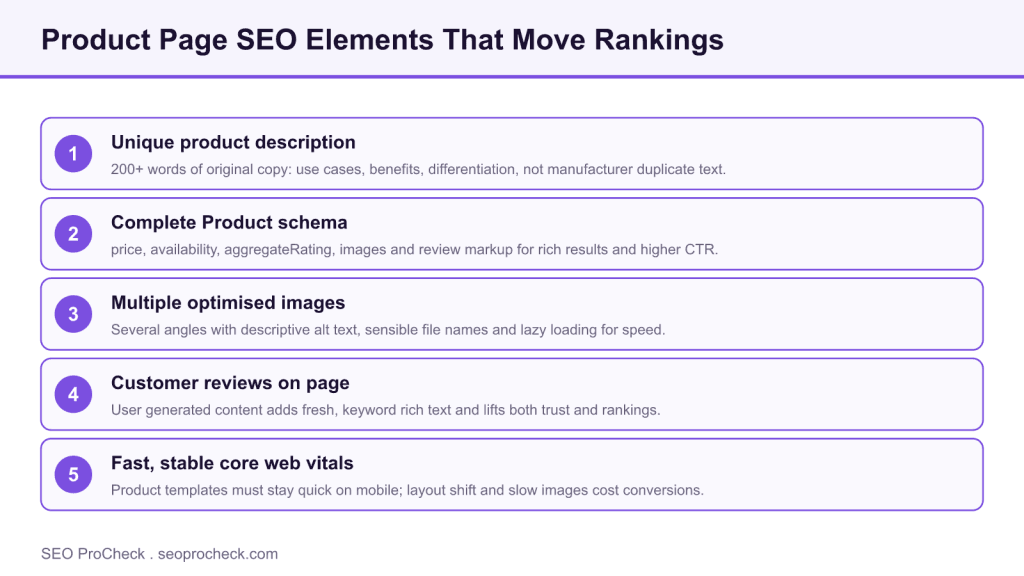
AI Summary
Product pages rank and convert best when they combine unique, substantive descriptions, complete Product schema, multiple optimised images, and genuine customer reviews on a fast, stable template. Prioritise unique copy and correct schema first, then reviews and performance, because those move both rankings and conversion at the same time.
- Unique descriptions of 200 or more words outrank thin pages that only list specifications.
- Complete Product schema with price, availability and aggregateRating supports rich results and higher click through.
- Multiple optimised images with descriptive alt text aid both rankings and conversion.
- Customer reviews add fresh, keyword rich content and lift trust and rankings together.
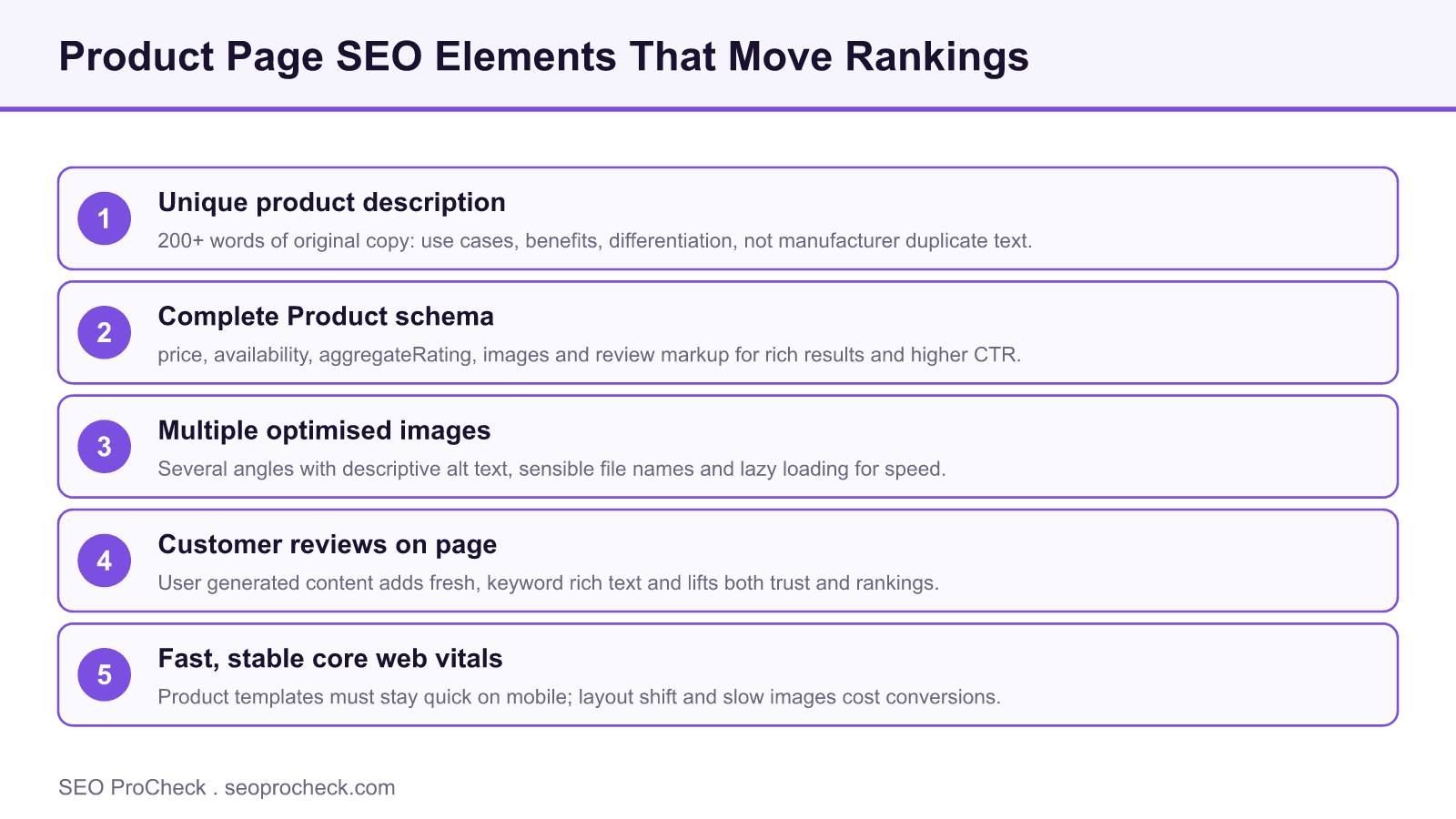
Research into e-commerce product page optimization examined which elements correlate with both search rankings and conversion performance. The study sought to identify practices that serve SEO and UX simultaneously.
Product Description Depth
Product pages with substantive descriptions (200+ words of unique content) outranked thin pages with only specifications. Original descriptions incorporating use cases, benefits, and differentiation performed better than manufacturer-provided copy duplicated across retailers.
Schema Implementation
Product schema with complete attributes (price, availability, reviews, images) correlated with rich result appearance and higher CTR. Missing or incomplete schema limited visibility in product-focused SERP features. Review schema showing aggregate ratings particularly impacted click-through.
Image Optimization
Multiple high-quality product images from various angles improved both rankings and conversion. Image optimization including alt text, file naming, and lazy loading contributed to page performance. Visual search optimization through image quality and metadata increased discovery pathways.
User-Generated Content
Product pages with customer reviews showed stronger rankings than those without. Review content provided additional keyword relevance and freshness signals. Facilitating and displaying reviews benefits SEO while building purchase confidence.
Source: E-commerce product page research compiled
Priority order for product page optimisation
When you have limited time per product, sequence the work by impact. Unique copy and correct structured data come first because they unlock both organic visibility and rich results. Reviews and performance come next because they compound trust and conversion. Everything else is refinement. The research this page summarises found that the same elements tend to serve search and user experience at once, so you rarely have to trade one for the other.
Descriptions that rank and convert
Thin pages that only echo the manufacturer's specification sheet struggle, because that copy is duplicated across every retailer selling the item. Aim for at least 200 words of original description that covers use cases, benefits and what makes this product different. Write for the buyer's real question, then let the specification table handle the raw numbers. A useful structure is a short benefit led paragraph, a bullet list of key features, and a plain specification table below.
Complete Product schema
Product schema with full attributes is what makes a listing eligible for price, availability and review rich results. A minimal but complete template looks like this, with your real values swapped in:
{
  "@context": "https://schema.org",
  "@type": "Product",
  "name": "Your Product Name",
  "image": ["https://example.com/img/front.jpg"],
  "description": "Original description of the product.",
  "brand": {"@type": "Brand", "name": "Your Brand"},
  "offers": {
    "@type": "Offer",
    "price": "YOUR_PRICE",
    "priceCurrency": "USD",
    "availability": "https://schema.org/InStock"
  },
  "aggregateRating": {
    "@type": "AggregateRating",
    "ratingValue": "YOUR_RATING",
    "reviewCount": "YOUR_COUNT"
  }
}
Only include aggregateRating when you genuinely have reviews on the page, because inventing ratings violates the guidelines and risks a manual action. Validate the markup in the Rich Results Test before shipping. If you need a refresher on how indexing directives interact with these templates, see our meta robots and X-Robots-Tag reference.
Images, reviews and performance
Provide several high quality images from different angles, each with a descriptive alt text, a sensible file name and lazy loading below the fold. Encourage and display customer reviews: user generated content adds fresh, keyword rich text, provides social proof, and correlates with stronger rankings. Finally, keep the template fast. Product pages carry heavy imagery, so watch core web vitals on mobile, reserve space for images to avoid layout shift, and defer non critical scripts.
The same content quality signals that help any page get cited apply here too, so our AI content quality score is a useful cross check, and you can browse related studies in the e-commerce research section.
What has changed since this research
Shopping results and AI powered product summaries increasingly pull from structured product data and review signals, which raises the payoff for complete, accurate schema and genuine reviews. The core recommendations hold, but the cost of missing or incorrect structured data is higher now that more surfaces read it directly.
Product page elements and quick wins
| Element | Quick win | Check with |
|---|---|---|
| Description | 200 or more words of original copy | Duplicate content scan |
| Product schema | Add price, availability, aggregateRating | Rich Results Test |
| Images | Multiple angles, alt text, lazy load | Lighthouse, manual review |
| Reviews | Enable and display customer reviews | Review count on page |
| Performance | Stable, fast mobile template | Core Web Vitals report |
Frequently asked questions
What makes a product page rank well?
A combination of unique, substantive description copy, complete Product schema, multiple optimised images and genuine customer reviews on a fast, stable template. These elements tend to help rankings and conversion at the same time.
How long should a product description be?
Aim for at least 200 words of original content that covers use cases, benefits and differentiation, not just the manufacturer specification sheet. Duplicated spec copy appears on every retailer's page and rarely helps you rank.
Do I need Product schema on every product page?
Yes, complete Product schema with price, availability and, where genuine reviews exist, aggregateRating makes your listings eligible for rich results and can lift click through. Validate it in the Rich Results Test before publishing.
Can I add review schema without real reviews?
No. Only include aggregateRating when real reviews appear on the page. Inventing ratings breaks the structured data guidelines and can trigger a manual action, so collect genuine reviews first.
How many images should a product page have?
Provide several high quality images from different angles, each with descriptive alt text and a sensible file name. Lazy load images below the fold so the extra visuals do not slow the page down.
Do customer reviews help SEO?
Yes. Reviews add fresh, keyword rich user generated content, build purchase confidence and correlate with stronger rankings. Facilitating and displaying reviews benefits search performance and conversion together.
Take this with you
The assistant links open with a question about this page already written. Nothing is sent until you press enter.
Claude Vincent is a technical SEO consultant focused on crawlability, rendering, and AI-search visibility. He writes the field guides and case studies at SEO ProCheck, with a bias toward the durable, unglamorous work that decides whether search engines and AI answer engines can actually read and cite a site.
About SEO ProCheck
Technical SEO consulting and GEO strategy with 20 years of enterprise experience. Case studies, resources, and tools for search and AI visibility.
Work With Me
Technical SEO audits, GEO strategy, site migrations, and international SEO. Hourly consulting for teams who need hands-on support, not just reports.
Subscribe to our newsletter!








Recent Posts
- Most Top Sites Never Say Who They Are in Structured Data October 14, 2026
- Homepage Titles Are Mostly Too Short, Not Too Long October 8, 2026
- Who Actually Serves an llms.txt? 184 Top Sites Measured September 29, 2026