

Why Linguistics & Natural Language Processing are Important for SEO | Seer Interactive
- March 11, 2020
- General

AI Summary
Linguistics and natural language processing (NLP) matter for SEO because modern search engines rank meaning, not literal keyword strings. When you write for how engines parse language, through tokenization, lemmatization, entity resolution and intent, your pages match more queries without keyword stuffing.
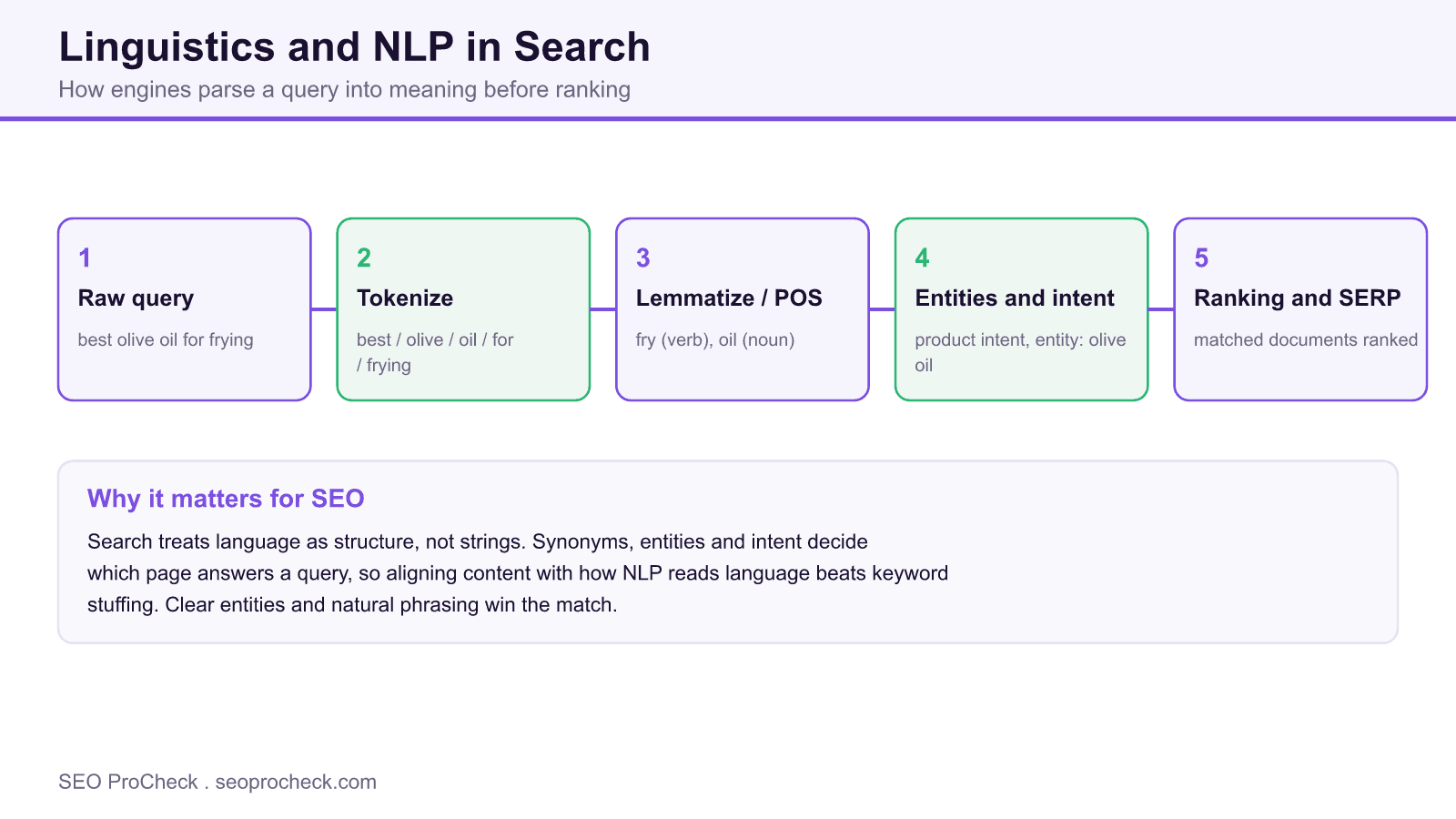
- Search engines break a query into tokens, reduce words to base forms, tag parts of speech, then resolve entities and intent.
- Synonyms, related entities and natural phrasing help a page match queries it never states word for word.
- The same NLP thinking now drives AI answer engines that retrieve and cite passages.
- Practical wins: write clear entities, answer the intent directly, and avoid robotic keyword repetition.
Why Linguistics & Natural Language Processing are Important for SEO | Seer Interactive provides valuable insights for SEO practitioners. This resource examines approaches and considerations that can improve organic search performance.
Key Concepts
Understanding the fundamental principles behind this topic helps inform strategic decisions. Whether optimizing for traditional search or emerging AI platforms, foundational concepts remain relevant. This resource covers the essential knowledge practitioners need.
Implementation Considerations
Moving from concept to execution requires understanding practical constraints and opportunities. Different situations call for different approaches. This resource provides guidance for applying concepts in real-world contexts.
Measuring Impact
SEO efforts require measurement to demonstrate value and guide optimization. Identifying appropriate metrics, establishing baselines, and tracking progress enables data-driven improvement. This resource addresses how to evaluate success.
This resource contributes to the knowledge base SEO practitioners need for effective optimization in an evolving search landscape.
Source: https://www.seerinteractive.com/blog/why-natural-language-processing-is-important-for-seo
What linguistics and NLP actually do in a search pipeline
Search engines do not compare your page to a query as two blocks of text. They run the query through a language pipeline first. Tokenization splits the string into units, so best olive oil for frying becomes best, olive, oil, for, frying. Lemmatization reduces each token to a base form, so running, ran and runs all map to run, which is why a page about frying can match a search that uses fried or fry. Part of speech tagging separates the noun oil from the verb oil. Named entity recognition then links surface words to known things: olive oil is a product entity, Google is an organization, Paris is a place. Only after this parsing does the engine decide which documents answer the query and in what order.
This is why two pages with identical keyword counts can rank very differently. The engine reads structure and meaning, not term frequency alone. A page that names the right entities, answers the underlying intent and uses natural language tends to match a far wider set of queries than a page that repeats one exact phrase.
Intent is the part most SEO teams underuse
Every query carries an intent: informational, navigational, commercial or transactional. NLP based ranking systems are increasingly good at classifying that intent and rewarding pages that satisfy it. A search for how to fix a slow website wants a diagnostic walkthrough, not a product page. A search for best website speed tool wants a comparison. When your content type matches the intent, dwell time and satisfaction signals improve, which reinforces ranking.
How to write for language models and search engines at once
- Name entities explicitly. Refer to products, people, standards and places by their real names so entity extraction can connect your page to the wider knowledge graph.
- Cover the query family, not one string. Use natural synonyms and related terms so lemmatization and synonym matching can link your page to many phrasings.
- Answer the intent in the first screen. Lead with a direct answer, then support it. This helps both human readers and passage retrieval.
- Keep sentences parseable. Short, unambiguous sentences are easier for a model to segment, embed and quote.
- Avoid keyword stuffing. Repetition no longer fools a system that reads meaning, and it hurts readability signals.
Whats changed since this article was written
The linguistic foundations described in the source still hold, but the stakes have grown. Generative answer engines such as Google AI Overviews, ChatGPT and Perplexity apply the same language understanding to retrieve and quote individual passages, so clarity now decides whether a passage gets cited, not just ranked. The practical advice has therefore shifted from optimize for a keyword toward write self contained, entity rich passages a model can lift and attribute. If you want your content quoted by AI systems, the linguistics work in this piece is the groundwork. See our note on the Retrieval Confidence Score for how confidently AI systems pull a passage, and browse more SEO articles on the topic.
NLP stages and their SEO impact
| NLP stage | What it does | What it means for your page |
|---|---|---|
| Tokenization | Splits text into words and units | Clean, well spaced copy parses cleanly |
| Lemmatization | Reduces words to base forms | One page matches many word variants |
| POS tagging | Labels grammar roles | Disambiguates words with two meanings |
| Entity recognition | Links words to known things | Connects your page to the knowledge graph |
| Intent classification | Infers what the searcher wants | Match content type to intent to win the click |
Frequently asked questions
Do I still need exact match keywords?
Exact phrases can help you confirm relevance, but they are no longer required for a match. Because engines lemmatize and resolve synonyms, a page can rank for phrasings it never states verbatim. Focus on covering the topic and intent in natural language.
Is keyword density a ranking factor?
Not in any meaningful modern sense. Systems that read meaning are not fooled by repetition, and heavy density hurts readability. Aim for natural coverage of the entities and questions around your topic instead.
How does NLP affect AI Overviews and chatbots?
Answer engines use the same language understanding to retrieve and quote passages. Clear, self contained sentences that name entities are easier to lift and cite, so linguistic clarity now influences AI visibility directly.
What is an entity in SEO?
An entity is a distinct thing a search engine recognizes, such as a person, product, organization or place, along with its known attributes. Naming entities precisely helps engines connect your content to related concepts.
How do I optimize for search intent?
Identify whether the query is informational, commercial, navigational or transactional, then match the page type to it. A how to query wants a walkthrough, a best query wants a comparison. Serving the right format improves engagement signals.
Can structured data help NLP understand my page?
Yes. Structured data states entities and relationships explicitly, which complements the engine's own language parsing. See our overview of structured data for where to start.
Take this with you
The assistant links open with a question about this page already written. Nothing is sent until you press enter.
Claude Vincent is a technical SEO consultant focused on crawlability, rendering, and AI-search visibility. He writes the field guides and case studies at SEO ProCheck, with a bias toward the durable, unglamorous work that decides whether search engines and AI answer engines can actually read and cite a site.
About SEO ProCheck
Technical SEO consulting and GEO strategy with 20 years of enterprise experience. Case studies, resources, and tools for search and AI visibility.
Work With Me
Technical SEO audits, GEO strategy, site migrations, and international SEO. Hourly consulting for teams who need hands-on support, not just reports.
Subscribe to our newsletter!








Recent Posts
- Most Top Sites Never Say Who They Are in Structured Data October 14, 2026
- Homepage Titles Are Mostly Too Short, Not Too Long October 8, 2026
- Who Actually Serves an llms.txt? 184 Top Sites Measured September 29, 2026