

Can adding third-party ratings to meta descriptions improve SEO performance?
- June 23, 2022
- Metadata
AI Summary
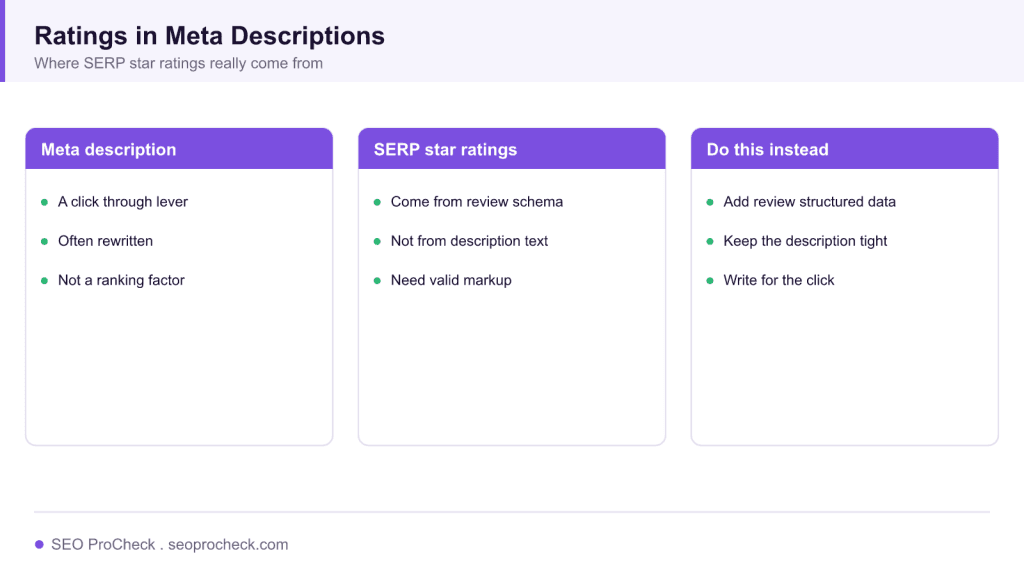
Adding third party rating text to a meta description can nudge clicks by adding social proof, but it will not produce star ratings in the result, because those come from review structured data. Treat the description as a click through lever that Google often rewrites, and use valid review markup if you want stars.
- The meta description is a click through lever, not a ranking factor.
- Google frequently rewrites the description to match the query.
- Star ratings render from review or aggregateRating structured data, not from words in the description.
- Keep the description near 150 characters so it does not truncate.
This SEO case study documents a successful optimization initiative, providing actionable insights for practitioners. The documented approach demonstrates how strategic SEO implementation drives measurable results.
Initial Situation
Understanding the starting point is essential context for evaluating any case study. This documentation covers the initial challenges, competitive position, and business objectives that shaped the SEO strategy.
Strategy and Approach
The strategic approach combined multiple SEO disciplines to address identified opportunities. Key decisions around prioritization and resource allocation provide a template for similar initiatives.
Implementation
Moving from strategy to execution required specific technical implementations, content development, and process changes. This case study documents the practical steps that translated strategy into action.
Results and Learnings
The outcomes demonstrate effectiveness through measurable improvements in rankings, traffic, and business metrics. Analysis of successes and challenges provides learning value for practitioners.
Case studies like this contribute to the SEO knowledge base, helping practitioners learn from documented real-world experiences.
What a meta description can and cannot do
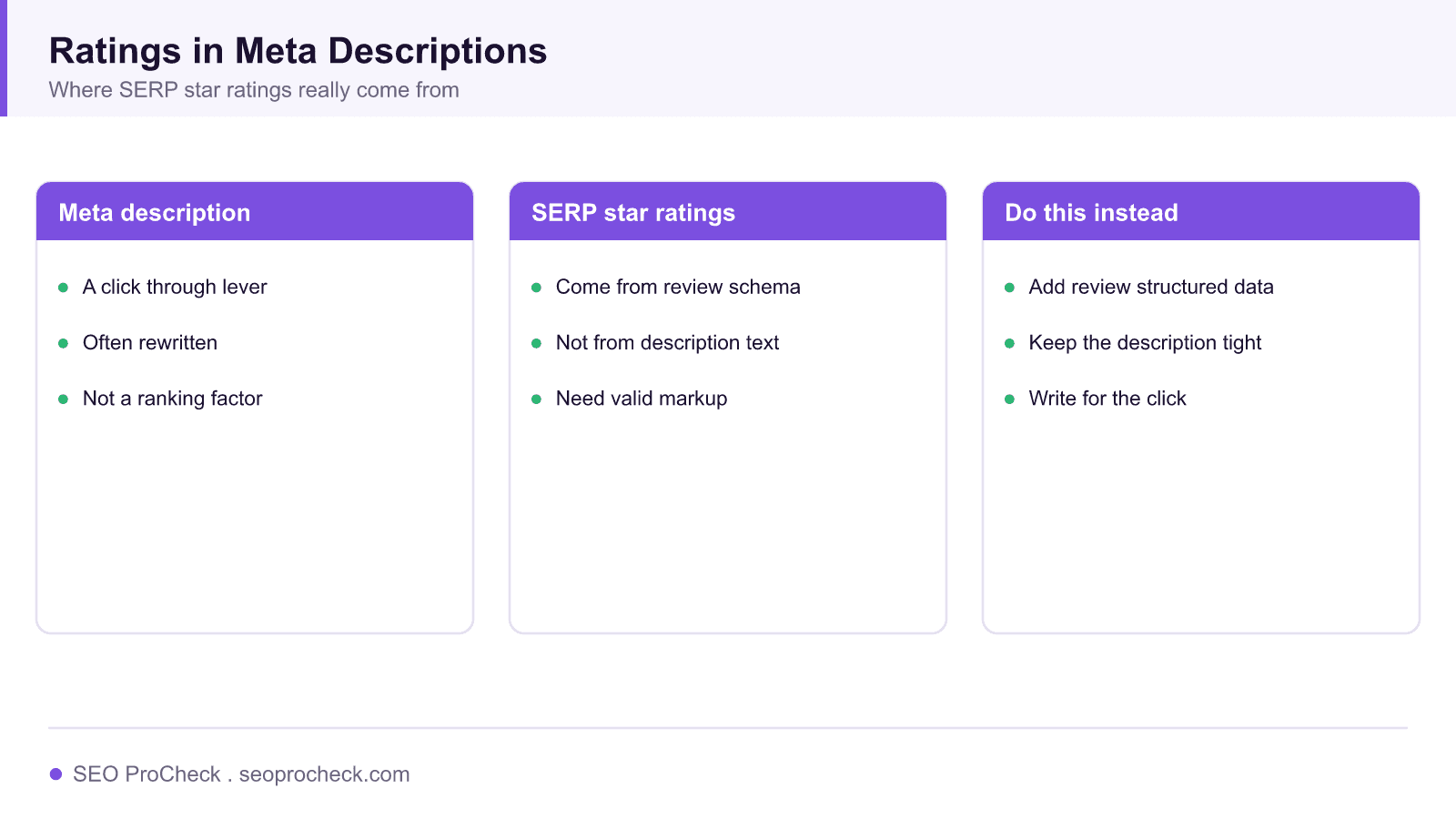
A meta description is a click through lever, not a ranking factor. Google frequently rewrites it, pulling a snippet from the page that best matches the query, so any text you place there is a suggestion rather than a guarantee. The star ratings that appear in some results do not come from words in the meta description. They are generated from review or aggregateRating structured data, so typing a phrase like "rated 4.8 by 2,000 customers" into the description will not produce stars on its own.
Reading the test as a practitioner
The linked SearchPilot case study uses SEO split testing to measure whether adding third party rating text to the description changes click behavior on a set of template pages. That is the right question to ask, because social proof in the snippet can raise clicks even when Google rewrites part of the text. When you read the result, note whether the win is in clicks rather than rankings, and whether the tested pages already carried review markup, since the presence of real stars changes how the extra words are read.
How to implement this properly
Write the description as a concise pitch of about 150 characters so it does not truncate, and lead with the benefit a searcher wants. In WordPress with Rank Math the description comes from a template you can set per post type, so you can bake a consistent pattern across a section. Keep it distinct from the title, since a page whose title and description say the same thing wastes a second selling line, and avoid a description that is too short to earn the click. For the full pattern, see our guide to title tags and meta descriptions.
If your real goal is star ratings in the result, add valid review or aggregateRating structured data tied to genuine reviews, and follow Google's rich result rules. Fabricated or self serving ratings can trigger a manual action, so only mark up ratings you can defend.
What has changed since this test
Google now rewrites descriptions more often than it did, and AI Overviews and other result features push the classic snippet further down the page. That makes the description a smaller lever than it once was, but a clear, benefit led line still earns clicks on the queries where the standard result still shows. Test the exact wording rather than assuming rating text always wins.
What drives each part of your result snippet
| Snippet element | Comes from | You control it by |
|---|---|---|
| Title link | Title tag, H1, anchors | Writing a concise, front loaded title |
| Description text | Meta description or page copy | Writing a tight, benefit led description |
| Star ratings | Review or aggregateRating schema | Adding valid review structured data |
| Sitelinks and extras | Site structure and markup | Clear navigation and relevant schema |
Frequently asked questions
Do stars in Google results come from the meta description?
No. Star ratings are generated from review or aggregateRating structured data on the page. Text in the meta description cannot create stars, though it can add social proof in words.
Does the meta description affect rankings?
Not directly. It is not a ranking factor. It influences the click through rate on results where Google shows your text, and stronger click behavior can support performance indirectly.
Why does Google ignore my meta description?
Google rewrites the description when it finds text on the page that matches the query better. A focused, relevant description that mirrors the page intent is more likely to be kept.
How long should a meta description be?
Around 150 characters is a safe target so the text does not truncate on most results. Lead with the benefit, since the first words carry the most weight for the click.
Can adding review text to descriptions cause problems?
Plain wording is fine, but do not imply structured ratings you cannot back with real review data and valid markup. Fabricated ratings risk a manual action.
What is the fastest way to earn star ratings in search?
Collect genuine reviews and mark them up with review or aggregateRating schema that meets Google's rich result guidelines, then validate the markup before you expect stars to appear.
Claude Vincent is a technical SEO consultant focused on crawlability, rendering, and AI-search visibility. He writes the field guides and case studies at SEO ProCheck, with a bias toward the durable, unglamorous work that decides whether search engines and AI answer engines can actually read and cite a site.
About SEO ProCheck
Technical SEO consulting and GEO strategy with 20 years of enterprise experience. Case studies, resources, and tools for search and AI visibility.
Work With Me
Technical SEO audits, GEO strategy, site migrations, and international SEO. Hourly consulting for teams who need hands-on support, not just reports.
Subscribe to our newsletter!







Recent Posts
- Can AI Crawlers Actually Read Your Site? I Measured 400 of the Biggest September 5, 2026
- The Pre-Publish Quality Gate for AI-Assisted Content August 6, 2026
- AGENTS.md vs llms.txt vs llms-full.txt: Which Agent File Does What July 18, 2026