

The May 2020 Google Core Update – 4 Case Studies That Emphasize The Complexity Of Broad Core Algorithm Updates
- May 15, 2020
- Uncategorized
AI Summary
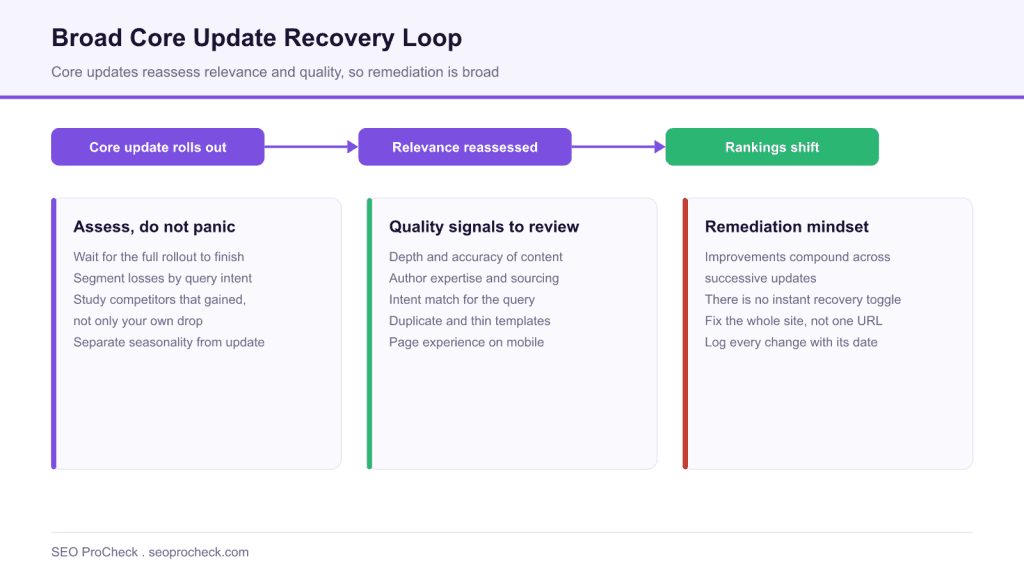
The May 2020 broad core update reassessed how relevant and trustworthy pages are for their queries, so recovery is about broad quality improvement rather than a single fix. Sites that dropped should compare themselves with competitors that gained, improve depth, expertise, and intent match, and expect any recovery to show up over subsequent updates rather than overnight.
- Broad core updates re-evaluate relevance and quality, they are not penalties you can appeal.
- There is no instant recovery toggle, and improvements compound across later updates.
- Segment traffic losses by query intent and study the sites that gained.
- Focus on content quality, expertise signals, and mobile page experience.

This SEO case study documents a successful optimization initiative, providing actionable insights for practitioners. The documented approach demonstrates how strategic SEO implementation drives measurable results.
Initial Situation
Understanding the starting point is essential context for evaluating any case study. This documentation covers the initial challenges, competitive position, and business objectives that shaped the SEO strategy.
Strategy and Approach
The strategic approach combined multiple SEO disciplines to address identified opportunities. Key decisions around prioritization and resource allocation provide a template for similar initiatives.
Implementation
Moving from strategy to execution required specific technical implementations, content development, and process changes. This case study documents the practical steps that translated strategy into action.
Results and Learnings
The outcomes demonstrate effectiveness through measurable improvements in rankings, traffic, and business metrics. Analysis of successes and challenges provides learning value for practitioners.
Case studies like this contribute to the SEO knowledge base, helping practitioners learn from documented real-world experiences.
Source: https://www.gsqi.com/marketing-blog/may-2020-google-core-update-case-studies/
Practitioner notes on broad core updates
The most useful thing to internalise about a broad core update is that it is not a manual action and not a targeted filter. Google describes these updates as a broad reassessment of how well pages match what searchers want. When your rankings drop, it does not mean a specific rule flagged your site, it means other pages were judged a better fit for the same queries. That reframing matters, because it points you toward improving the whole site rather than hunting for one thing to undo.
Start the diagnosis with patience and segmentation. Wait for the rollout to finish before drawing conclusions, because rankings can swing during the days a core update takes to deploy. Then segment your losses by query intent: informational, commercial, and navigational queries can move independently, and the pattern tells you where the reassessment landed. Crucially, look at who gained, not only at your own decline. The pages that replaced you are the clearest brief for what Google currently rewards for those queries.
From there the work is quality, applied broadly. Improve the depth and accuracy of thin pages, strengthen the expertise and sourcing behind claims, tighten intent match so each page answers the query it targets, and consolidate duplicate or near duplicate templates that dilute your relevance. Page experience is part of the picture too, so a slow or awkward mobile page is worth fixing while you are in there.
What has changed since May 2020
Many broad core updates have shipped since, and the framework has held up while the underlying systems evolved. The biggest structural change is that the separate helpful content system was folded into the core ranking systems with the March 2024 core update, so the signals that used to run alongside a core update now live inside it. The practical playbook is unchanged: improve quality broadly, and the site can be revalued by Google's smaller, unannounced core updates, so you don't necessarily have to wait for the next major core update. For recent, dated write ups you can compare against, see the May 2026 core update, the March 2026 core update, and the December 2025 core update. The historical Panda system is a useful reference for how quality signals became part of the core ranking picture in the first place.
Recovery checklist by area
| Area | What to review | Signal it improves |
|---|---|---|
| Content | Depth, accuracy, and intent match | Relevance for the query |
| Expertise | Author sourcing and citations | Trust and quality assessment |
| Site structure | Duplicate and thin templates | Consolidated relevance |
| Technical | Indexing and crawl health | Efficient discovery |
| Page experience | Mobile speed and stability | User facing quality |
Work the checklist top to bottom by impact. Recovery from a core update is a program that plays out across several updates, not a patch you apply to one URL.
Frequently asked questions
Is a broad core update a penalty?
No. It is a broad reassessment of how well pages match what searchers want, not a manual action or a targeted filter. If you dropped, other pages were judged a better fit rather than your site being flagged for a specific violation.
How quickly can I recover from a core update?
There is no instant recovery. Google says you don't necessarily have to wait for a major core update, because it also ships smaller core updates that can revalue improvements, so recovery tends to appear gradually rather than immediately after you make changes.
What should I look at first after a core update drop?
Wait for the rollout to finish, then segment your losses by query intent and study the pages that gained. Those winning pages are the clearest brief for what Google currently rewards for the queries you lost.
Did the helpful content system change how core updates work?
Yes. With the March 2024 core update, the separate helpful content system was integrated into the core ranking systems, so the quality signals that once ran alongside a core update now operate inside it.
Should I remove content to recover from a core update?
Only remove or consolidate pages that are genuinely thin, duplicate, or unhelpful. Blanket deletion is risky. The stronger move is usually to improve depth, accuracy, and intent match across the site.
How do I know if my changes are working?
Log what you changed and when, then watch how the site moves, including at the next broad core update. Because recovery can be revalued by smaller core updates as well as major ones, a change log is the only reliable way to attribute improvement.
Take this with you
The assistant links open with a question about this page already written. Nothing is sent until you press enter.
Claude Vincent is a technical SEO consultant focused on crawlability, rendering, and AI-search visibility. He writes the field guides and case studies at SEO ProCheck, with a bias toward the durable, unglamorous work that decides whether search engines and AI answer engines can actually read and cite a site.
About SEO ProCheck
Technical SEO consulting and GEO strategy with 20 years of enterprise experience. Case studies, resources, and tools for search and AI visibility.
Work With Me
Technical SEO audits, GEO strategy, site migrations, and international SEO. Hourly consulting for teams who need hands-on support, not just reports.
Subscribe to our newsletter!








Recent Posts
- Most Top Sites Never Say Who They Are in Structured Data October 14, 2026
- Homepage Titles Are Mostly Too Short, Not Too Long October 8, 2026
- Who Actually Serves an llms.txt? 184 Top Sites Measured September 29, 2026