

The Story of TheSun.co.uk shows us why SEO is so important - SISTRIX
- June 14, 2017
- Crawling and Indexing
AI Summary
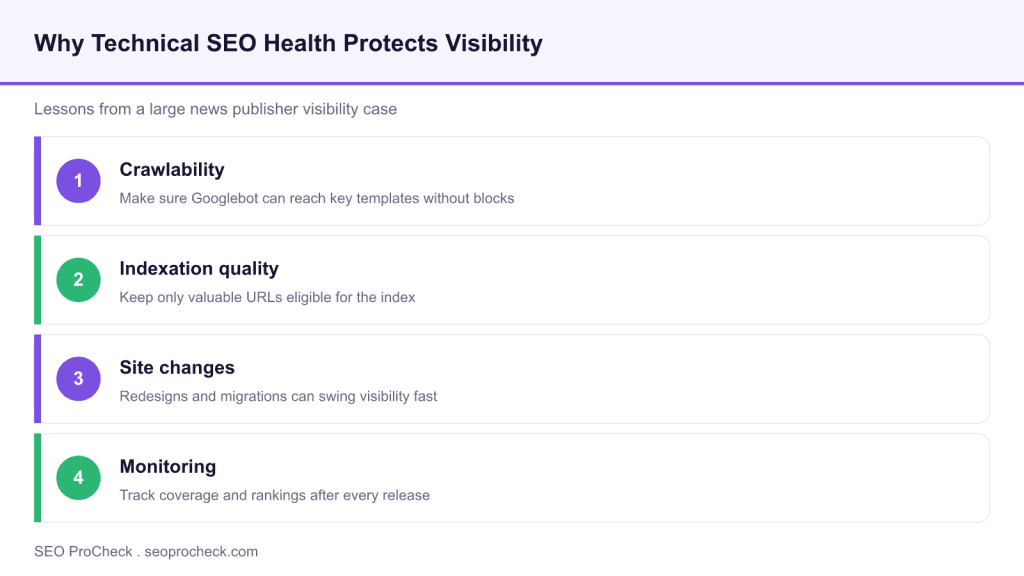
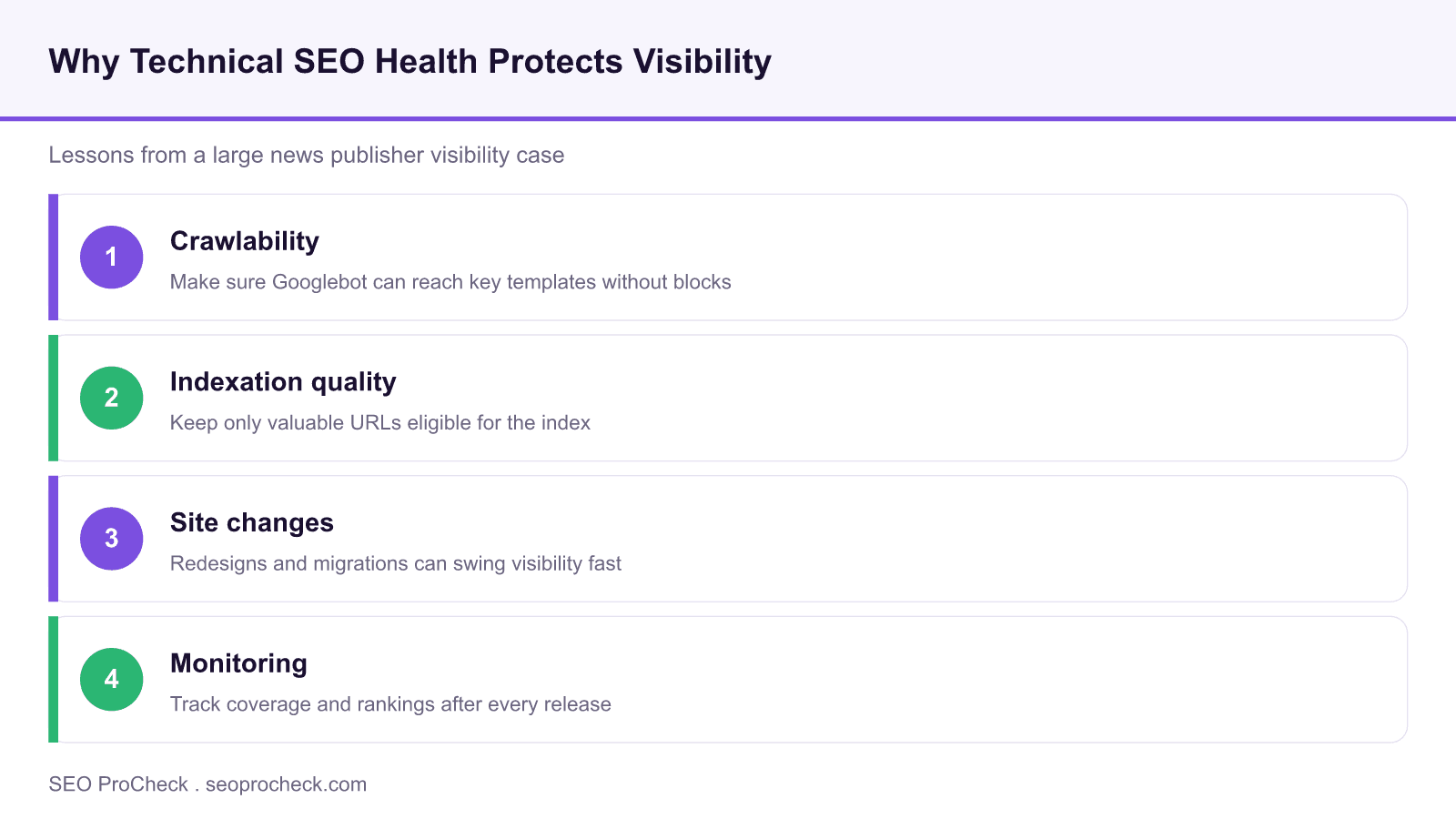
This case study, originally published by SISTRIX, uses The Sun to show that a large publisher's organic visibility is a direct readout of its technical SEO health. When crawling, indexing, canonical signals or content quality slip, visibility can move quickly, which is why continuous technical maintenance matters more than one time fixes.
- Publisher visibility reflects crawl access, index quality and content signals at any moment.
- Template level regressions get multiplied across hundreds of thousands of URLs.
- Redesigns, paywalls and migrations are the most common triggers for sudden swings.
- Monitoring index coverage and rankings after each release catches problems early.
This SEO case study documents a successful optimization initiative, providing actionable insights for practitioners. The documented approach demonstrates how strategic SEO implementation drives measurable results.
Initial Situation
Understanding the starting point is essential context for evaluating any case study. This documentation covers the initial challenges, competitive position, and business objectives that shaped the SEO strategy.
Strategy and Approach
The strategic approach combined multiple SEO disciplines to address identified opportunities. Key decisions around prioritization and resource allocation provide a template for similar initiatives.
Implementation
Moving from strategy to execution required specific technical implementations, content development, and process changes. This case study documents the practical steps that translated strategy into action.
Results and Learnings
The outcomes demonstrate effectiveness through measurable improvements in rankings, traffic, and business metrics. Analysis of successes and challenges provides learning value for practitioners.
Case studies like this contribute to the SEO knowledge base, helping practitioners learn from documented real-world experiences.
Source: https://www.sistrix.com/blog/the-story-of-thesun-co-uk-shows-us-why-seo-is-so-important/
Why this case still matters for practitioners
News publishers operate at a scale where a small technical regression is never small in effect. A template that loses a block of crawlable links, a canonical tag that starts pointing at the wrong URL, or a rendering change that hides body copy behind script can ripple across hundreds of thousands of pages in days. The original write up frames The Sun as a reminder that organic visibility is not a trophy you win once, it is a live reading of how well your site is crawled, indexed and judged for quality right now.
The practical takeaway is that visibility charts are diagnostic, not decorative. A steep move usually maps to a discrete cause: a change in how crawl budget is spent, a shift in what stays eligible for the index, or a content update that changed how the algorithm rates the pages. Treat every large movement as an incident with a root cause worth finding.
A checklist I run on large publisher sites
First, confirm Googlebot can still reach the money templates. Fetch key page types as Googlebot, check robots rules, and verify internal links render in the raw HTML rather than only after script execution. Second, audit indexation quality so that only pages worth ranking stay eligible, a discipline covered well in this study on quality indexation for large sites. Third, validate canonical logic end to end, because a subtle canonical mistake behaves exactly like the trap described in this case of canonicalization and can quietly consolidate the wrong URLs.
Finally, wire up monitoring that alerts on coverage and ranking shifts rather than waiting for a traffic drop to surface in a monthly report. The faster you connect a visibility move to the release that caused it, the cheaper the fix.
One more habit pays off on sites this size: keep a written change log that ties every deploy, plugin update and template edit to a date. When visibility moves weeks later, that log turns a guessing game into a short lookup, and it stops the same regression from shipping twice.
| Area | What to watch | Signal to monitor |
|---|---|---|
| Crawl access | Robots rules and script dependent links | Crawl stats and fetched HTML |
| Indexation | Thin or duplicate URLs kept eligible | Index coverage report |
| Redirects and migrations | Mismatched or chained redirects | Soft 404 and redirect reports |
| Content quality | Sections that thin out over time | Rankings and helpful content signals |
What's changed since
This case is dated, and the surfaces around it have moved. Google completed the shift to mobile first indexing, folded helpful content assessment into its core updates, and began surfacing AI overviews above classic results. For a news brand, visibility now also depends on Google News and Discover, on valid Article structured data, and on Core Web Vitals rather than only on the desktop crawl the original piece assumed.
The core lesson generalizes cleanly: protect crawl access, keep only valuable URLs indexable, and watch quality signals continuously. What changed is the number of surfaces where a regression can show up, so modern monitoring has to span web, News, Discover and the AI answer layer.
Frequently asked questions
Why do large news sites see such big visibility swings?
Publishers manage huge URL counts, so any template or platform change is applied at massive scale. A single canonical, robots or rendering regression can affect hundreds of thousands of pages at once, which shows up as a sharp move on a visibility chart.
Is SISTRIX visibility the same as traffic?
No. Visibility is a modelled index of how often and how highly a domain ranks for a tracked keyword set. It correlates with traffic but is not a direct measure of sessions, so always confirm moves against Search Console and analytics.
What technical issues most often hurt publisher visibility?
The frequent culprits are blocked or script dependent internal links, canonical tags pointing at the wrong URLs, redirect mistakes during redesigns, and body content that only appears after JavaScript runs.
How fast can Google reflect a technical fix?
For frequently crawled news templates, improvements can appear within days once Googlebot recrawls and reprocesses the pages. Lower priority sections can take weeks, so patience and monitoring both matter.
Does content freshness matter for this kind of site?
Yes. News and time sensitive topics reward timely, well structured coverage, but freshness never substitutes for crawl access and index quality. A fresh page that cannot be crawled cleanly still will not rank.
How should I monitor visibility over time?
Combine a third party visibility index for trend context with Search Console for ground truth on impressions, clicks and coverage. Annotate every release so you can attribute each move to a specific change.
Claude Vincent is a technical SEO consultant focused on crawlability, rendering, and AI-search visibility. He writes the field guides and case studies at SEO ProCheck, with a bias toward the durable, unglamorous work that decides whether search engines and AI answer engines can actually read and cite a site.
About SEO ProCheck
Technical SEO consulting and GEO strategy with 20 years of enterprise experience. Case studies, resources, and tools for search and AI visibility.
Work With Me
Technical SEO audits, GEO strategy, site migrations, and international SEO. Hourly consulting for teams who need hands-on support, not just reports.
Subscribe to our newsletter!







Recent Posts
- Can AI Crawlers Actually Read Your Site? I Measured 400 of the Biggest September 5, 2026
- The Pre-Publish Quality Gate for AI-Assisted Content August 6, 2026
- AGENTS.md vs llms.txt vs llms-full.txt: Which Agent File Does What July 18, 2026