Perplexity Optimization: Getting Cited in AI-Powered Search
- September 25, 2024
- GEO (Generative Engine Optimization), AI and Search
AI Summary
Perplexity is a citation first answer engine that searches the web in real time and builds every response around linked sources, so pages that answer a specific question directly and clearly earn citations. To get cited, structure content as clear questions and answers, keep it current, and publish genuinely comprehensive coverage.
- Perplexity cites sources on nearly every answer, unlike systems that rely mainly on training data.
- Community content, news, and expert sites all surface, so niche publishers have a real path to visibility.
- Recency matters more here than on classic search; fresh, dated content is favored for evolving topics.
- Track referral traffic from the perplexity.ai domain to learn which pages get cited.
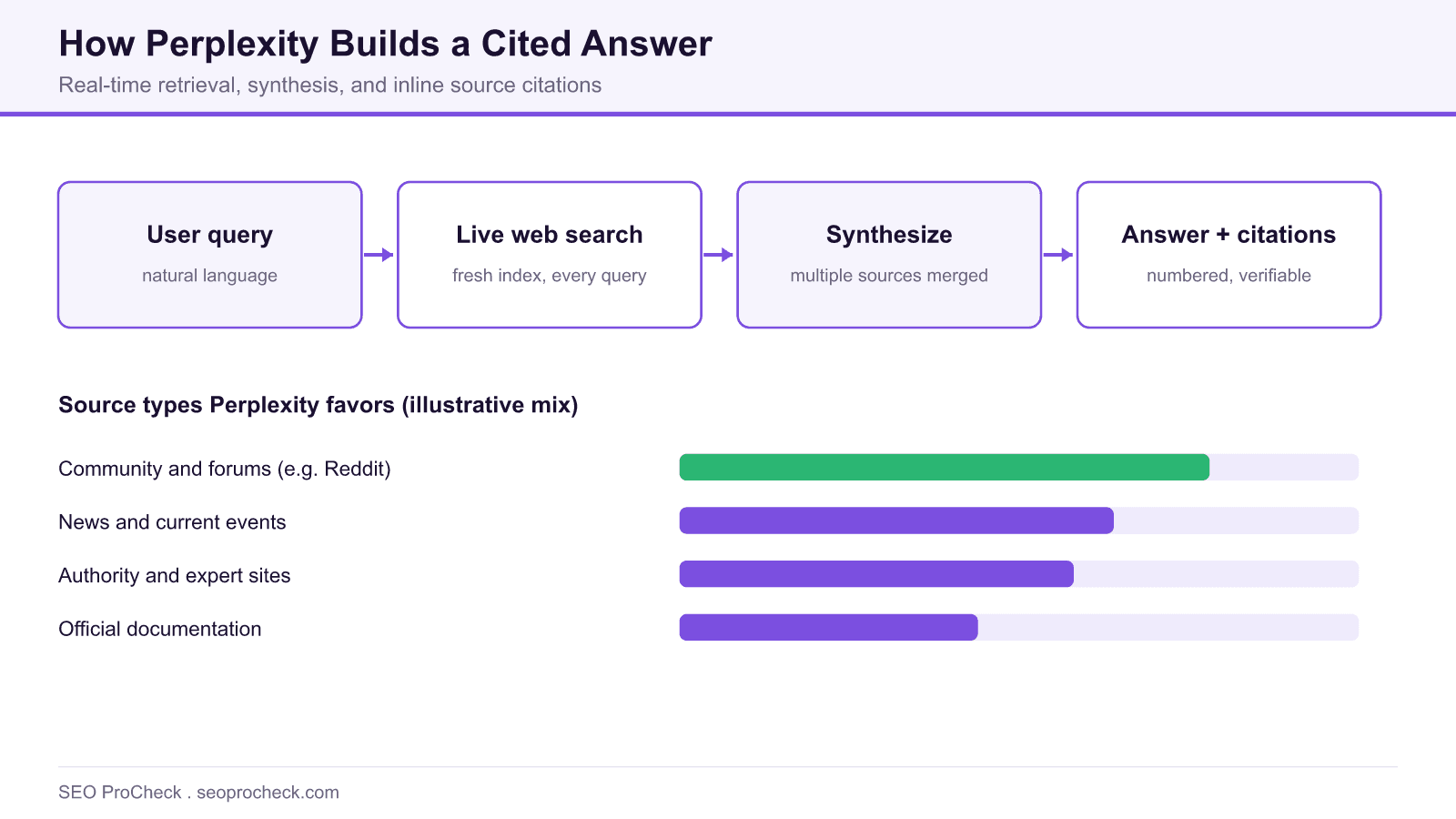
Perplexity has emerged as a leading AI-native search engine, differentiated by its citation-first approach that always shows sources. Unlike ChatGPT which may or may not cite sources, Perplexity builds every response around citations, making it a particularly important platform for GEO optimization.
How Perplexity Works
Perplexity searches the web in real-time for every query, synthesizing results into comprehensive answers with inline citations. This differs from ChatGPT's primarily training-data-based approach. Perplexity's real-time nature means fresh content can appear in results immediately, and content updates are reflected quickly.
Analysis shows Perplexity cites a broader range of sources than other AI systems. While still favoring authoritative domains, niche expert sites appear in Perplexity citations at higher rates than in ChatGPT or AI Overviews. This creates opportunity for specialized publishers to gain visibility.
Citation Patterns on Perplexity
Research into Perplexity's citation behavior reveals distinct patterns. Reddit content appears in 46.7% of Perplexity results, reflecting the platform's weighting toward community and user-generated content. News sources appear prominently for current events. Expert blogs and specialized resources surface for technical queries.
Perplexity shows stronger recency bias than other AI platforms. For evolving topics, recently published content frequently outranks older authoritative sources. This creates opportunity for timely content to gain immediate visibility, unlike platforms where established sources dominate.
Optimizing Content for Perplexity
Structure content with clear question-and-answer formats. Perplexity excels at answering specific questions; content that directly addresses questions in headings with immediate answers performs well. Use natural language that matches how users phrase queries.
Include comprehensive information with supporting detail. Perplexity synthesizes from multiple sources; having the most complete information on a topic increases citation likelihood. Cover related questions and subtopics that users might ask as follow-ups.
Maintain content freshness. Perplexity's real-time search means outdated content may be passed over for newer alternatives. Regular updates with current information maintain visibility. Add publication and update dates to signal freshness.
Differentiation from Google Optimization
Perplexity optimization differs from Google in key ways. Traditional ranking factors like backlinks matter less; content quality and relevance matter more. Perplexity can elevate newer, high-quality content over established but stale pages. This levels the playing field for emerging authoritative sources.
Tracking Perplexity Performance
Search Perplexity regularly for your key topics. Note whether your content appears in citations and analyze competing sources. Perplexity's transparent citation approach makes competitive analysis straightforward. Track referral traffic from Perplexity through analytics to measure growth and identify high-performing content.
A Practical Workflow for Earning Perplexity Citations
Start from the questions your audience actually types, then build a page that answers one primary question near the top and covers the natural follow ups below it. Because Perplexity retrieves and synthesizes on every query, the pages it favors tend to state a clear answer in the first paragraph, then support that answer with specifics: numbers, named tools, steps, and short definitions it can lift cleanly. Lead with the answer, then explain.
Keep each section focused on a single idea under a descriptive header. When one heading maps to one question, Perplexity can match a query to that block and quote it with confidence. Long, meandering sections that mix several topics are harder to extract and less likely to be cited. Short paragraphs, tight sentences, and self contained facts all help.
Formatting That Perplexity Extracts Cleanly
Answer engines reward structure. The table below maps common content patterns to why they help extraction, so you can prioritize edits that move the needle.
| Content pattern | Why Perplexity favors it | Practical step |
|---|---|---|
| Question style headers | Match user queries directly | Rephrase vague H2s into the question a reader would ask |
| Answer in first sentence | Easy to quote as a standalone fact | Put the direct answer before the explanation |
| Named data and figures | Attributable, quotable specifics | Cite the number and its source inline |
| Fresh publish and update dates | Signals current information | Show a visible last updated date and keep it honest |
| Comprehensive coverage | One page answers the whole intent | Cover the primary question plus follow up questions |
What Has Changed Recently
Perplexity has expanded well beyond a single answer box. It now runs its own crawler, ships a Pages feature where users assemble sourced write ups, and layers in shopping and finance answers. The practical takeaway for publishers is unchanged and reinforced: the platform leans on live retrieval, so pages that stay current and answer intent directly keep an edge. Because Perplexity often cites several sources in one response, you do not need to outrank a major publication to appear; you need to answer a facet of the query better than the alternatives.
For a deeper playbook on the tactics that win citations, see our Perplexity citation strategy guide. To compare how different engines pick sources, read how AI engines choose sources and our guide to getting cited in ChatGPT.
Frequently Asked Questions
How is Perplexity different from ChatGPT for SEO?
Perplexity searches the web in real time and cites sources on nearly every answer, while ChatGPT draws more heavily on training data and cites less consistently. That makes fresh, well structured, source worthy content more directly rewarded on Perplexity.
Do backlinks matter for Perplexity citations?
Backlinks matter less than they do for classic Google rankings. Perplexity weighs how directly and completely a page answers the query, which lets newer and niche pages get cited when they cover intent well.
How do I know if Perplexity is citing my content?
Search your key topics on Perplexity and check whether your pages appear in the numbered citations. In analytics, filter for referrals from the perplexity.ai domain to see which pages send traffic.
Does content freshness really affect Perplexity visibility?
Yes. Perplexity shows a stronger recency bias than most platforms, so recently published or updated pages often surface ahead of older authoritative ones for evolving topics. Keep dates visible and accurate.
What content format performs best on Perplexity?
Clear question and answer structure with the direct answer stated first, supported by specific, attributable facts. Descriptive headers that match how people phrase queries make your content easier to extract and cite.
Can small or niche sites get cited on Perplexity?
Yes. Because Perplexity often cites multiple sources per answer and favors direct, specific coverage, specialized publishers can appear alongside large brands when their page answers a facet of the query better.
Claude Vincent is a technical SEO consultant focused on crawlability, rendering, and AI-search visibility. He writes the field guides and case studies at SEO ProCheck, with a bias toward the durable, unglamorous work that decides whether search engines and AI answer engines can actually read and cite a site.
- AEO, AI SEO, GEO, Local SEO, Perplexity
About SEO ProCheck
Technical SEO consulting and GEO strategy with 20 years of enterprise experience. Case studies, resources, and tools for search and AI visibility.
Work With Me
Technical SEO audits, GEO strategy, site migrations, and international SEO. Hourly consulting for teams who need hands-on support, not just reports.
Subscribe to our newsletter!