

The Google May 2022 Broad Core Update – 5 micro-case studies that once again underscore the complexity of broad core algorithm updates
- July 18, 2022
- Uncategorized
AI Summary
The Google May 2022 broad core update reinforced a lesson Glenn Gabe has documented across many rollouts: broad core updates are complex and site level, so no single factor explains a gain or a loss. The five micro case studies referenced here show why chasing one cause is a trap and why durable recovery comes from broad quality improvement measured over weeks.
- Broad core updates reassess overall quality and relevance across the whole index.
- Winners and losers often share surface traits, so shallow pattern matching misleads.
- Recovery is rarely instant and frequently arrives with a later core update.
- The response that works is broad, honest quality improvement, not a single quick fix.
Why micro case studies beat a single theory
When a broad core update rolls out, the instinct is to find the one thing that explains who won and who lost. Glenn Gabe of GSQI has argued repeatedly, and the May 2022 update reinforced, that this instinct fails because broad core updates operate at the level of the whole site and the whole index. Looking at several sites side by side, the micro case study approach, exposes the trap: two sites can share the same supposed problem and land on opposite sides of the update. That is the point of studying five examples rather than one, it keeps you honest about how much is really unexplained.
The takeaway is not that the update is random. It is that quality is assessed across many dimensions at once, so the search for a single culprit usually produces a story that fits one site and breaks on the next.
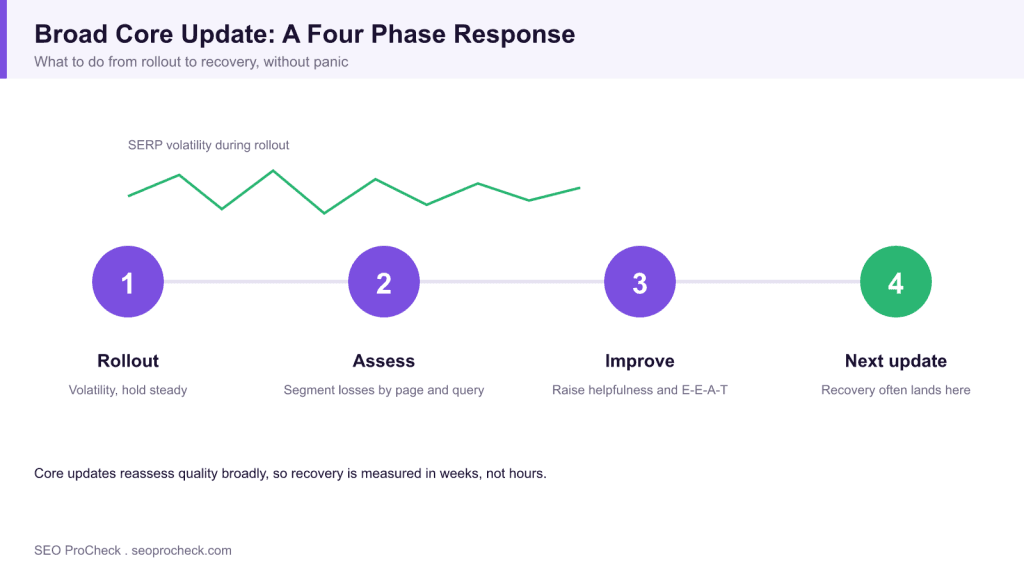
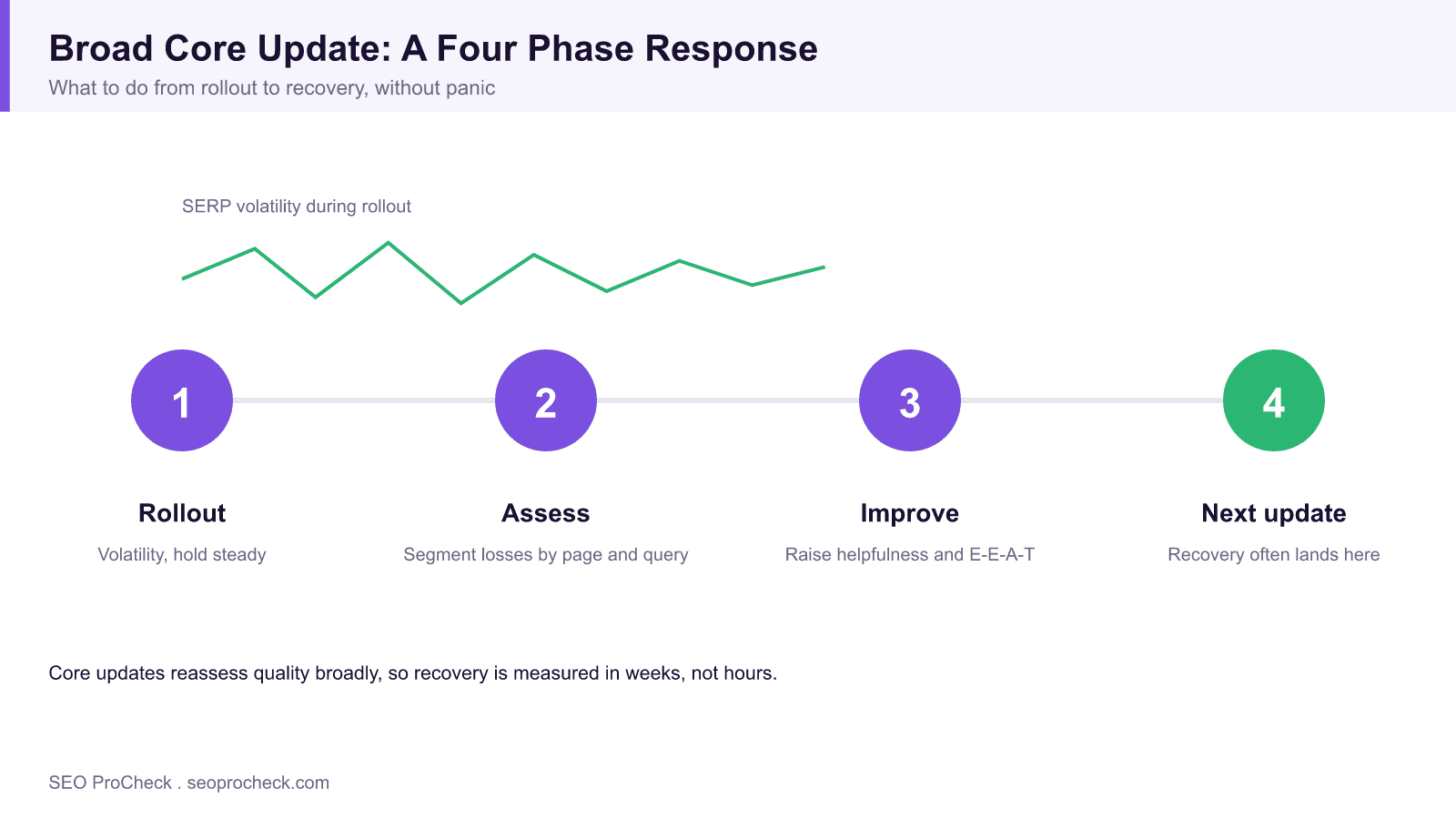
A four phase response to a broad core update
Instead of reacting to daily swings, work the update in phases:
- Phase 1, rollout: a broad core update typically takes one to two weeks to roll out fully, and rankings can swing in both directions during that window. Do not act on partial data or make sweeping changes while positions are still moving.
- Phase 2, assess: once the rollout completes, segment the change. Which templates, pages, and query clusters lost or gained, and what do the winners in your space now do better. Confirm the affected URLs are still indexed so you do not mistake a technical fault for an algorithmic one.
- Phase 3, improve: raise genuine quality on the pages that matter. Add first hand experience, tighten intent match, cut thin and duplicative content, and strengthen the trust signals behind the site.
- Phase 4, next update: hold the improvements steady. Because Google reassesses quality over time, meaningful recovery from a broad core update frequently lands with a subsequent core update rather than in the days after your changes.
What the micro case studies caution against
| Tempting conclusion | Why it misleads | Better move |
|---|---|---|
| One factor caused my drop | Broad core updates weigh many signals at once | Assess quality broadly across the site |
| My competitor won so copy them | Surface traits do not reveal the real cause | Study what genuinely serves the searcher better |
| Rankings moved so react now | Positions swing during the rollout window | Wait for full rollout before deciding |
| Recovery should be immediate | Quality is reassessed over time | Hold improvements and measure over weeks |
| It must be a penalty | Core update losses are not manual actions | Improve quality rather than file reconsideration |
What has changed since
This analysis is dated to the May 2022 broad core update, so read it as a case study rather than current event coverage. Since then Google has run many more broad core updates and merged its helpful content signals into core ranking, which makes the site level, quality first framing here more relevant, not less. The advice that held up best is exactly the advice that was unglamorous at the time: do not chase a single factor, do not panic during rollout, improve genuine helpfulness and experience, and expect recovery to track later core updates. The rise of AI overviews has changed how results are presented, but it has not changed the underlying priority for broad core updates, which is still whether your pages are the most helpful, trustworthy answer for the query.
The original resource
AI and generative search optimization represents an emerging frontier for organic visibility. This case study documents approaches to improving visibility in AI-powered search experiences and LLM citations.
AI Search Context
As AI increasingly mediates search, understanding how AI systems select and cite sources becomes strategically important. This case study establishes the AI visibility challenges and opportunities addressed.
Optimization Approach
GEO optimization differs from traditional SEO in key ways. This case study documents specific approaches to content structure, factual density, and authority signals that improve AI citation likelihood.
Implementation Details
Moving from GEO concept to practice requires specific content changes and measurement approaches. This case study covers implementation methodology and how AI visibility was tracked and measured.
AI Visibility Results
Success in AI search manifests as citations, mentions, and referral traffic from AI platforms. This case study quantifies AI visibility improvements and their business impact.
Early GEO case studies like this help practitioners understand the emerging AI search optimization landscape.
Source: https://www.gsqi.com/marketing-blog/google-may-2022-broad-core-update/
Frequently asked questions
What is a Google broad core update?
It is a significant, wide reaching change to Google's core ranking systems that reassesses how pages across the whole index are judged for quality and relevance. Sites can rise or fall without changing anything, because the update changes how existing signals are weighed.
Why did the May 2022 core update hit sites that looked fine?
Broad core updates evaluate quality across many dimensions at the site and page level, so a site can look technically clean and still be judged less helpful than competitors for its queries. The micro case studies show that surface level audits often miss the real reason.
How long does a broad core update take to roll out?
Usually one to two weeks. Rankings can move in both directions during that window, which is why acting on partial data or making drastic changes mid rollout is a common mistake.
How do I recover from a broad core update?
Improve genuine quality broadly: add first hand experience, sharpen intent match, remove thin content, and strengthen trust signals. Then hold those changes, because recovery often arrives with a later core update rather than immediately.
Is a core update drop a penalty?
No. A core update loss is an algorithmic reassessment, not a manual action, so there is nothing to file a reconsideration request for. The path back is sustained quality improvement, not an appeal.
Why study five micro case studies instead of one?
Because comparing several sites exposes how often the same supposed cause appears on both winners and losers. That prevents the tidy but wrong single factor story and keeps your diagnosis honest about what is genuinely unexplained.
Related reading on seoprocheck.com
Claude Vincent is a technical SEO consultant focused on crawlability, rendering, and AI-search visibility. He writes the field guides and case studies at SEO ProCheck, with a bias toward the durable, unglamorous work that decides whether search engines and AI answer engines can actually read and cite a site.
About SEO ProCheck
Technical SEO consulting and GEO strategy with 20 years of enterprise experience. Case studies, resources, and tools for search and AI visibility.
Work With Me
Technical SEO audits, GEO strategy, site migrations, and international SEO. Hourly consulting for teams who need hands-on support, not just reports.
Subscribe to our newsletter!







Recent Posts
- Can AI Crawlers Actually Read Your Site? I Measured 400 of the Biggest September 5, 2026
- The Pre-Publish Quality Gate for AI-Assisted Content August 6, 2026
- AGENTS.md vs llms.txt vs llms-full.txt: Which Agent File Does What July 18, 2026